


Portable Phone Charger Fast Charging Guide
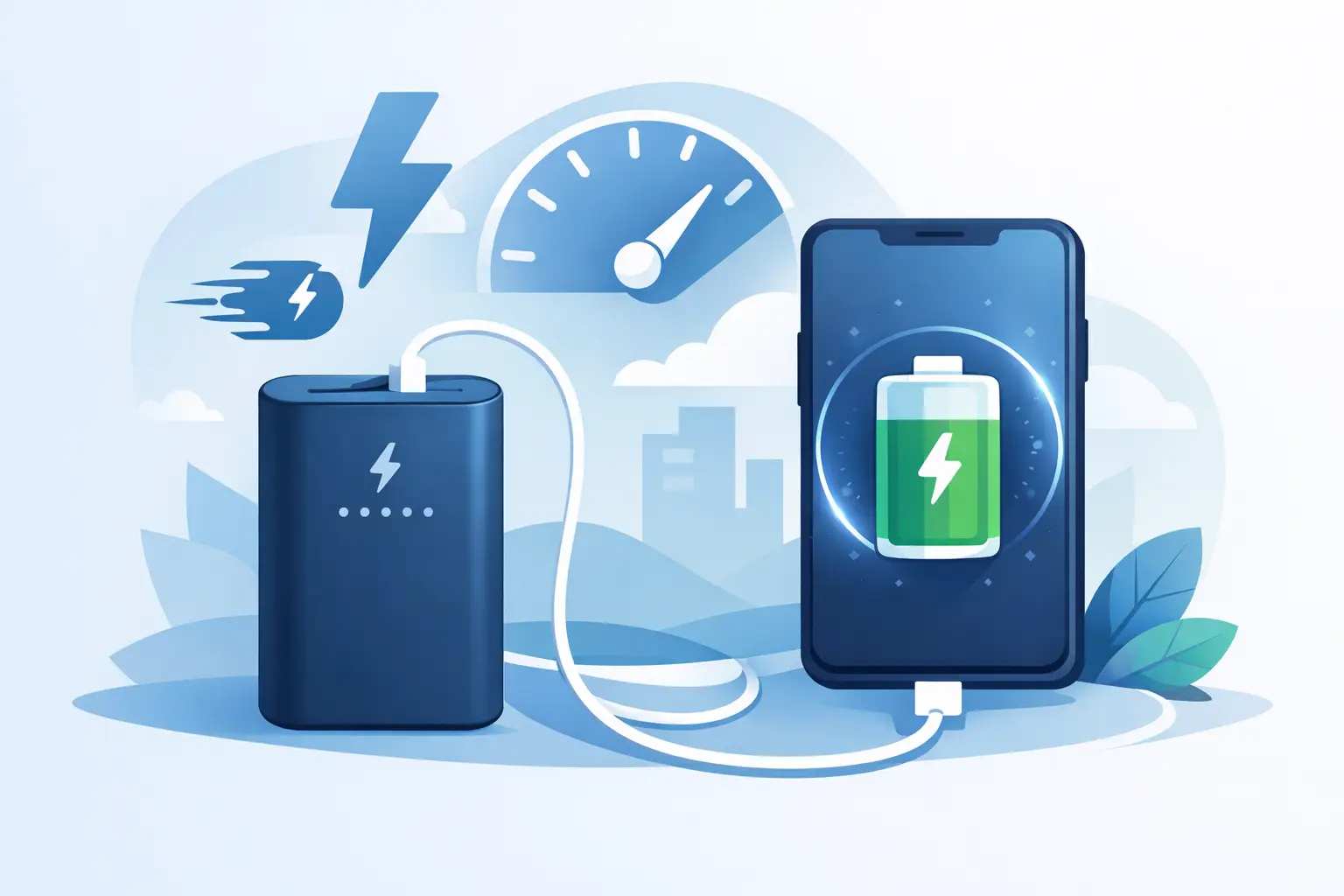
Your phone dies at the worst possible moment – in the car between stops, at the airport gate, during a long workday, or halfway through a weekend trip. That is exactly why a portable phone charger fast charging setup matters. A good power bank does more than add battery life. It helps you get meaningful power back quickly, so you can spend less time tethered to a cable and more time moving.
The tricky part is that not every charger labeled “fast” actually feels fast in real use. Some have big battery capacity but slow output. Others charge your phone quickly once, then take forever to recharge themselves. If you want a better buying decision, it helps to look past the packaging and focus on the features that match how you actually use your devices.
What portable phone charger fast charging really means
Fast charging usually refers to how much power the charger can deliver to your phone, measured in watts. Higher wattage can mean faster charging, but only when your phone supports it and the cable can handle it. If one part of the setup is limited, the whole charging speed drops.
For most shoppers, the real goal is simple. You want a charger that can give your phone a useful boost in a short amount of time, not just trickle in power. That is especially important if you rely on navigation, mobile payments, streaming, work apps, or constant messaging throughout the day.
There is also a difference between charging speed and battery size. A large-capacity power bank can keep you going longer, but that does not guarantee quick charging. Capacity tells you how much stored power you have. Output tells you how fast that power reaches your device.
The specs that actually matter
When comparing portable chargers, capacity is usually the first number people notice. You will often see 5,000mAh, 10,000mAh, 20,000mAh, or more. A smaller charger is easier to carry and works well for light daily backup. A mid-size option fits most people best because it balances portability with enough power for one to two full charges on many phones. A larger model is better for road trips, travel, or charging multiple devices, but it adds weight and takes up more bag space.
Output wattage matters just as much. If you want faster top-ups, look for a charger that clearly states fast charging support and gives solid output through USB-C or compatible USB ports. In general, a low-output power bank can still be useful for emergencies, but it will feel slow if you are trying to recover battery in 20 to 30 minutes before heading out again.
Port selection also affects convenience. USB-C has become the most flexible option because it often supports faster input and output. That means the charger can power your phone faster and recharge itself faster too. A model with both USB-C and USB-A ports makes sense if you carry different cables or share power with family members.
Another practical detail is input speed. Many shoppers focus only on how fast the power bank charges the phone, but forget to ask how long it takes to refill the power bank itself. If a high-capacity charger needs most of a day to recharge, that may be frustrating if you use it often.
How to choose the right size for your routine
The best charger depends on where and how you use it. If you need something for everyday backup during commutes, errands, school, or office use, a slim 5,000mAh to 10,000mAh option is often enough. It is easier to slip into a pocket, purse, glove box, or center console without feeling bulky.
If you travel regularly or spend long hours away from outlets, a 10,000mAh to 20,000mAh charger is usually the better choice. It gives more room for repeated phone charging and may also support earbuds, smartwatches, tablets, or other small electronics. This is a better fit for people who want one charger to cover several situations instead of buying separate compact and high-capacity models.
For road trips, outdoor events, and family use, capacity starts to matter more than slim design. In those cases, a larger charger with multiple ports is often worth the extra size. You may not carry it in your pocket, but it can be the right solution for a backpack, travel bag, or vehicle setup.
Cables can make or break charging speed
A fast charger is only as good as the cable connected to it. If the cable is old, low-quality, or not designed for higher power transfer, charging may slow down even if the power bank itself is capable of more. This is one of the most common reasons shoppers feel disappointed after buying a fast-charging portable battery.
USB-C to USB-C cables are often the best match for newer phones and newer power banks, though it depends on your device. iPhone users and Android users may need different cable types, and some phones respond better to certain charging standards than others. The point is not to overcomplicate it. Just make sure your cable is built for fast charging and works with your phone’s port.
Built-in cables can be convenient because they reduce clutter and make the charger easier to grab and go. Still, there is a trade-off. If the built-in cable wears out or does not match your preferred device, flexibility drops. Detachable cables are less tidy, but they are easier to replace.
Features worth paying for – and features you can skip
Some extras are genuinely useful. A digital battery display gives a more precise reading than a four-light indicator. That helps when you are planning a long day out and want to know exactly how much charge remains. Pass-through charging can also be helpful, since it allows the power bank to charge a device while it recharges itself, though performance may vary by model.
Multiple ports are worth it if you regularly carry more than one device. This is especially practical for shoppers who want one power solution for a phone, earbuds, and smartwatch. If you are mainly charging one phone at a time, extra ports may not be a deciding factor.
Wireless charging sounds convenient, but it is not always the best value if speed is your top priority. Wired charging is usually faster and more efficient. Magnetic wireless options can be handy for quick attachment, but they may generate more heat and charge more slowly than a cable connection.
Rugged construction is helpful for travel, commuting, and car use, especially if the charger will live in a bag or vehicle instead of on a desk. Ultra-premium finishes, on the other hand, are nice to have but not always worth paying extra for if your main goal is dependable everyday performance.
Common mistakes shoppers make
The biggest mistake is buying based on one number alone. A huge capacity looks appealing, but if the power bank is slow, heavy, or inconvenient to recharge, it may not suit daily use. On the other hand, an ultra-compact charger may look sleek but fail to deliver enough backup when you actually need it.
Another common issue is ignoring compatibility. Fast charging is not universal in the simplest sense. Your phone, charger, and cable need to work well together. If one part does not support the same charging standard, you may still get power, just not at the speed you expected.
Price can be misleading too. The cheapest option may save money up front but can feel frustrating over time if charging is inconsistent or build quality is poor. The most expensive model is not automatically the best either. For most shoppers, the sweet spot is a well-reviewed mid-range charger with clear specs, practical capacity, and dependable port options.
A smarter way to shop for a fast charger
If your phone is part of your workday, travel routine, or daily driving, it makes sense to shop for a charger based on convenience, not just raw specs. Think about where you carry it, how often you need it, whether you charge one device or several, and how quickly you need power back when time is tight.
That is where a broad online store can make the process easier. Instead of bouncing between specialty shops, many shoppers prefer finding electronics and everyday essentials in one place. At Vespena.com, that kind of convenience matters because shoppers often want practical products that fit into real routines without overpaying or overthinking the purchase.
A good portable charger should feel simple once you own it. It should fit your day, charge at a pace that feels worth it, and save you from battery anxiety when you are away from an outlet. If you choose with your actual habits in mind, the right one will not just sit in a drawer – it will become one of the most useful things you carry.













Leave a comment