


125mm f/10 GoTo SCT Telescope: StarBright XLT Views
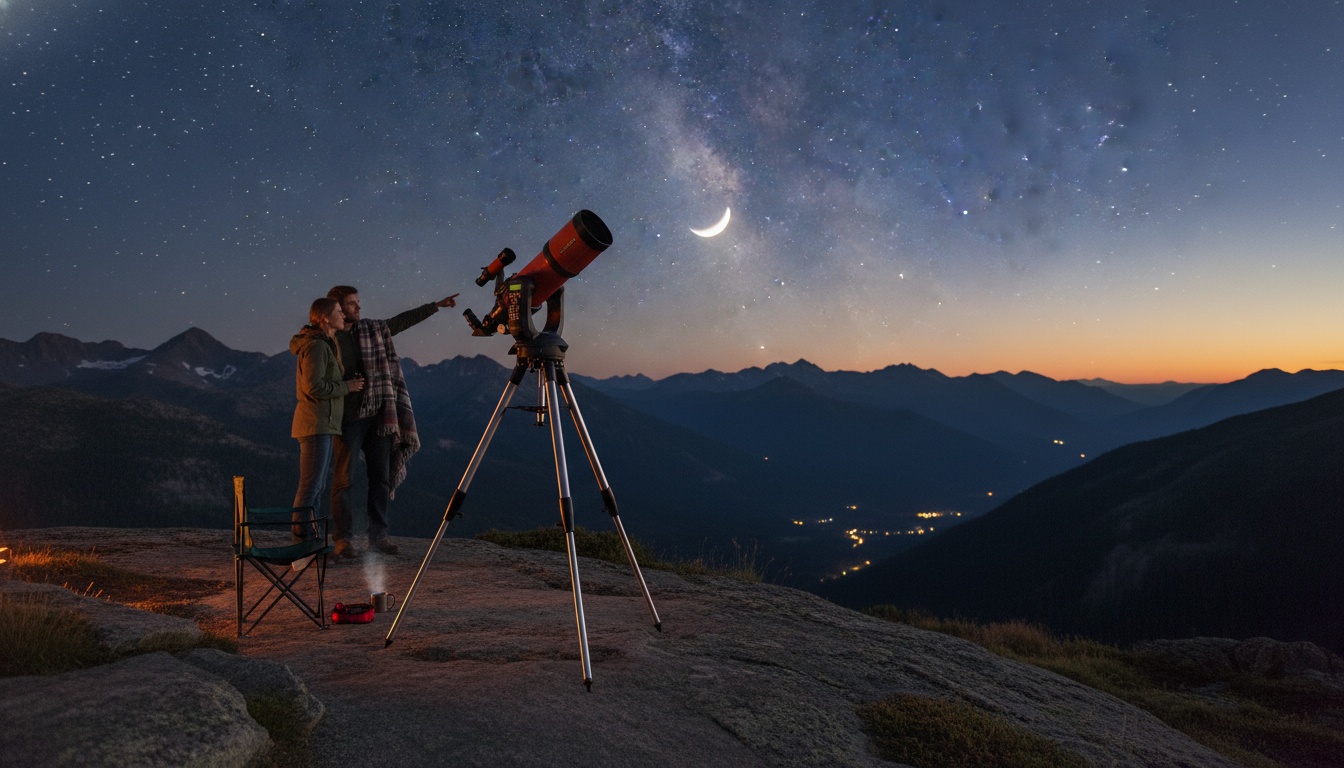
125mm F/10 Schmidt-Cassegrain Computerized GoTo Telescope with StarBright XLT: Big Reach in a Compact Package
A 125mm Schmidt-Cassegrain with computerized GoTo is built for observers who want compact portability without giving up reach on the Moon, planets, and bright deep-sky targets. With a long effective focal length and enhanced coatings, this type of optical tube pairs well with guided object location, making it easier to spend time observing rather than searching—especially under light-polluted skies.
What this telescope is designed to do well
- High-magnification views in a compact tube: The Schmidt-Cassegrain layout keeps the instrument short while delivering a long focal length for lunar and planetary detail.
- Computerized GoTo for efficient sessions: Ideal for quick setup nights, outreach, and observers who prefer selecting targets from a hand controller or alignment routine rather than star-hopping.
- Aperture suited to mixed targets: A 125mm-class telescope can show crisp lunar features, planetary banding in good seeing, double stars, and many brighter clusters and nebulae from darker sites.
- Coatings matter for contrast: StarBright XLT enhanced optical coatings are designed to improve light throughput and perceived contrast, helping with faint targets and subtle planetary detail.
Key optical and mechanical characteristics to notice
On paper, 125mm and f/10 look straightforward—until you translate them to the eyepiece. This configuration leans into magnification and detail, while still staying manageable for transport and storage.
At-a-glance specifications (from product listing)
| Item | Value |
|---|---|
| Optical design | Schmidt-Cassegrain |
| Aperture | 125mm |
| Focal ratio | F/10 |
| Computerized GoTo | Yes |
| Optical coatings | StarBright XLT |
| MPN | 23949 |
| SKU | 1 |
| Availability | In stock |
- Aperture (125mm): This gathers substantially more light than typical entry-level 60–80mm scopes, improving resolution and visibility of faint objects.
- Focal ratio (f/10): Favors higher magnification with common eyepieces and is often forgiving for edge performance, while generally producing a narrower true field than short-tube refractors.
- Moving-mirror focusing: SCT focusing shifts the primary mirror. At high power, a light touch and a steady mount help keep the image stable while fine-tuning focus.
- Collimation awareness: SCTs can require occasional collimation checks—especially after transport—to keep star images tight at higher magnifications.
GoTo tracking: what to expect in real use
GoTo changes the rhythm of an observing session. Instead of spending the majority of the night locating objects, you spend more time comparing eyepieces, watching planetary detail settle in moments of steady seeing, and moving through a curated list of targets.
- Alignment is the gateway: Accurate GoTo depends on careful leveling, correct time/location entry, and a solid alignment routine (two-star or similar).
- Tracking helps at high magnification: Once aligned, tracking reduces manual nudging, which is especially helpful on the Moon and planets where small motions can quickly push the target out of view.
- Power planning matters: Computerized mounts perform best with a stable power source; weak batteries can cause inconsistent slewing or alignment errors.
- Target selection becomes the workflow: It’s easier to plan a structured night—Jupiter, Saturn, a double star, then a few bright showcase deep-sky objects—without long search breaks in between.
What can be seen: practical observing goals
A 125mm SCT is at its best when you match the night’s conditions to realistic goals. Good seeing and adequate cool-down time can make the difference between “soft” and “snappy” detail.
- Moon: High-contrast crater rims, mountain ranges, rilles, and changing shadow detail along the terminator.
- Planets: Cloud bands and moon transits on Jupiter in good seeing, Saturn’s ring system and brighter moons, and seasonal features on Mars when near opposition.
- Bright deep-sky objects: Globular clusters begin to resolve from darker skies; open clusters and brighter nebulae show more structure with smart eyepiece choice and (when appropriate) filters.
- Double stars: The aperture and focal length combination supports clean splits on many popular pairs when atmospheric steadiness cooperates.
For observing ideas and seasonal target lists, reliable references include Sky & Telescope’s equipment and observing articles and planetary context from NASA’s Solar System exploration site.
Setup tips for steadier views and faster sessions
Astrophotography and accessories: realistic expectations
Care, transport, and long-term ownership
Product page
If you’re ready to compare current pricing and what’s included in the box, start here: 125mm F/10 Schmidt-Cassegrain Computerized GoTo Astronomical Telescope with StarBright XLT. Pricing, availability, and listing details can change, so confirm any included accessories or bundle components on the product page before purchase.
More in-stock items
- Portable Eye Massager (a comfort add-on for long observing sessions and screen-heavy alignment/setup time)
- 13-Color RGB LED Night Light for Kids (useful for astronomy-themed nights at home; keep lighting low when preserving dark adaptation)
FAQ
Is a 125mm Schmidt-Cassegrain a good choice for beginners?
Yes—especially for beginners who want GoTo help and don’t mind learning a short alignment routine. Tracking also makes high-magnification views feel much easier because objects stay centered longer.
How hard is GoTo alignment, and how long does it take?
It typically takes a few minutes once familiar. The biggest keys are entering the correct time/location, carefully centering alignment stars, and using a stable power source.
What accessories are most useful first?
Start with dew control (a dew shield), a comfortable low-power eyepiece for centering targets, and a higher-power option for planetary observing. If you observe away from home, a reliable power plan for the computerized mount is also a top priority.















Leave a comment