


Car Cover vs Garage Parking: Which Protects More?
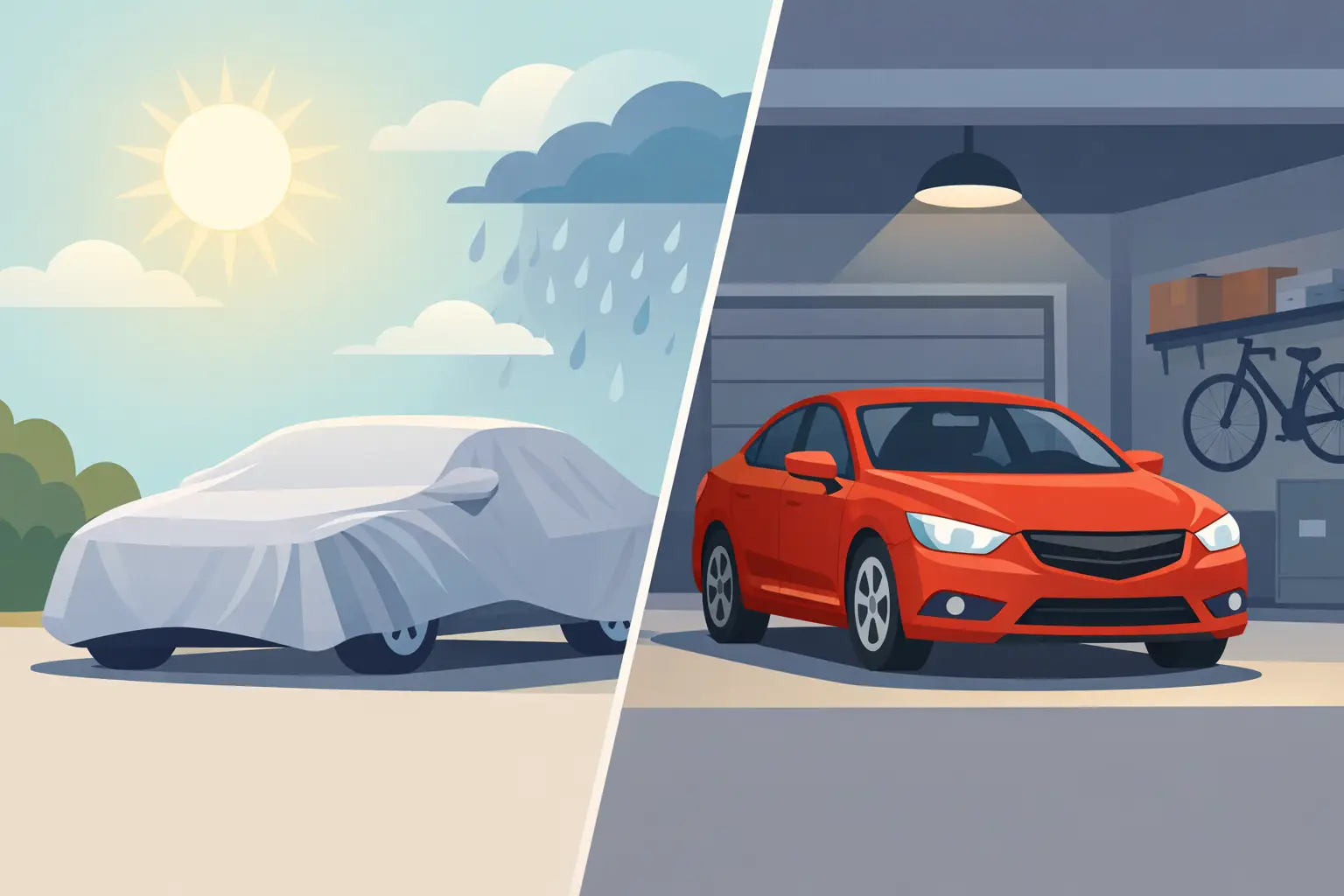
A driveway can turn a clean car into a dust-covered, sun-baked, bird-dropping target in a single weekend. When weighing car cover vs garage parking, the better choice depends on more than protection alone. Your climate, parking routine, vehicle value, available space, and willingness to use a cover correctly all matter.
Garage parking delivers the strongest everyday defense when you have access to a clean, secure space. A quality car cover is the practical alternative for drivers who park outdoors, use shared lots, or need added protection even inside a garage. The right answer is often not one or the other – it is matching the protection method to how and where you actually use your vehicle.
Car Cover vs Garage Parking: The Main Difference
A garage creates a physical barrier between your vehicle and most environmental hazards. It blocks direct sunlight, rain, snow, hail, falling leaves, tree sap, bird droppings, and much of the airborne dust that settles on outdoor vehicles. It can also add a layer of privacy and security, especially when the garage is locked.
A car cover protects the vehicle itself rather than the parking space around it. It is portable, usually far less expensive than renting, building, or maintaining a garage, and available for nearly any vehicle type. A well-fitted cover can shield paint, glass, trim, and interior surfaces from sun exposure and everyday outdoor debris.
The trade-off is convenience. Pulling a cover on and off takes a few minutes, and it needs to be installed on a reasonably clean, dry car. Garage parking is faster for frequent drivers: pull in, close the door, and you are done.
When Garage Parking Is the Better Choice
For a daily driver, garage parking is usually the most complete solution. It reduces repeated exposure to UV rays, which can fade paint, dry out rubber trim, and heat up the cabin. In areas with heavy snow, rain, wind, or intense summer sun, those benefits add up over years of ownership.
A garage also offers protection a cover cannot fully provide. Severe hail can dent a vehicle through many standard covers. Windblown branches, storm debris, and impacts from nearby objects can still cause damage outdoors. If theft, vandalism, or unwanted attention are concerns, an enclosed garage generally gives your vehicle a safer place to stay.
There is another practical advantage: a garage makes routine ownership easier. You can load groceries out of the rain, keep cleaning supplies nearby, install accessories in a sheltered space, and start the morning without scraping ice from the windshield. For households with room, this everyday convenience is a major reason garage parking is worth prioritizing.
Still, a garage is not automatically a perfect vehicle environment. Garages can collect dust, retain humidity, and become crowded with storage. A damp garage may encourage moisture-related issues, while a cluttered one increases the chance of door dings, scratches, and accidental bumps. Good ventilation, basic organization, and enough clearance around the vehicle make a real difference.
A Garage Helps Most If You Drive Often
If your car leaves the house most days, garage parking fits the routine better than repeatedly handling a cover. It also protects the vehicle during short overnight parking periods, when a cover may feel like more work than it is worth.
For a collector car, weekend vehicle, or vehicle that sits for long periods, garage parking remains valuable, but a breathable indoor cover can add another layer against dust and incidental contact.
When a Car Cover Makes More Sense
A car cover is often the smart choice for apartment residents, homeowners without a garage, and drivers who use a driveway, street space, or uncovered parking lot. It gives outdoor vehicles meaningful protection without requiring a permanent structure.
The key is choosing the correct type. Outdoor covers are designed to deal with sun, precipitation, dirt, and wind. They should be water-resistant, breathable, soft against painted surfaces, and equipped with secure straps or elastic hems. An indoor cover is lighter and useful for dust control, but it is not built for rain, snow, or harsh UV exposure.
Fit matters just as much as material. A loose universal cover can flap in the wind, trap debris, and rub against the paint. A vehicle-specific or close-fitting option stays in place better and provides more reliable coverage around mirrors, bumpers, and body contours. Before ordering, confirm your vehicle’s year, make, model, body style, and whether it has a spoiler, roof rack, or other accessories that affect fit.
For value-focused shoppers, a cover can be an affordable way to reduce the wear that makes a vehicle look older sooner. It may help preserve exterior condition between washes and reduce the frequency of cleaning caused by pollen, leaves, dust, and bird droppings.
Use a Cover Correctly to Avoid Paint Damage
A car cover can protect paint, but only when it is used properly. Covering a dirty vehicle can drag grit against the finish. Installing a cover on a wet car can hold moisture against the surface, especially if the cover is not breathable. These issues are more likely with frequent use in dusty or windy locations.
For best results, use a cover on a clean, dry vehicle whenever possible. Shake the cover out regularly, clean it according to its care instructions, and do not leave it on after a storm if the vehicle and cover need time to dry. In high-wind areas, use the included straps or tie-down points rather than relying only on elastic edges.
Cost, Convenience, and Daily Use
The financial comparison is straightforward at first: a car cover costs much less than constructing a garage or paying for a dedicated parking space. But the real decision includes how much effort you are willing to spend each week.
A cover is easy to store in the trunk or at home, making it useful for travel, seasonal storage, and temporary parking situations. It is also a flexible option if you move, rent, or share parking space. A garage is fixed, but it offers instant protection every time you park.
Consider your driving habits honestly. If you commute five or six days a week and park in a secure garage, an outdoor cover may sit unused. If your vehicle stays outside for days at a time, a cover can earn its place quickly. If you only have garage access during part of the year, a cover fills the gap when weather changes or parking arrangements do.
Can You Use a Car Cover Inside a Garage?
Yes. An indoor car cover is useful for vehicles parked in a garage for extended periods, particularly classic cars, seasonal convertibles, project cars, or extra household vehicles. It keeps dust off the finish and offers light protection from accidental contact while people move around the space.
Choose a soft, breathable indoor cover rather than a heavy weatherproof outdoor cover for this purpose. The goal indoors is dust and light scratch prevention, not rain protection. Make sure the car is clean and dry before covering it, and avoid piling storage items on top of the covered vehicle.
Using a cover in the garage is also helpful when the space doubles as a workshop, storage area, or hobby zone. Sawdust, drywall dust, paint overspray, and other fine particles can settle on a vehicle surprisingly fast.
Choose Protection Based on Where Your Car Sleeps
For the strongest all-around protection, use a garage whenever one is available and practical. Keep it reasonably clean, dry, and organized, then consider an indoor cover if the vehicle will sit for weeks or months.
If outdoor parking is your reality, a quality fitted cover is a practical investment. Look for options that match your vehicle and your local weather, whether you need sun protection in a hot climate, water resistance in a rainy area, or secure straps for windy conditions. Vespena makes it easier to shop automotive accessories alongside the everyday items your household needs, so you can focus on finding a protection solution that fits your car and budget.
The best choice is the one you will use consistently. A garage that stays too cluttered to park in and a cover that never leaves its storage bag offer the same level of protection: none. Start with your actual parking routine, choose the simplest option that solves your biggest risk, and give your vehicle a better place to rest each night.













Leave a comment