


A Practical Guide to Portable Generators
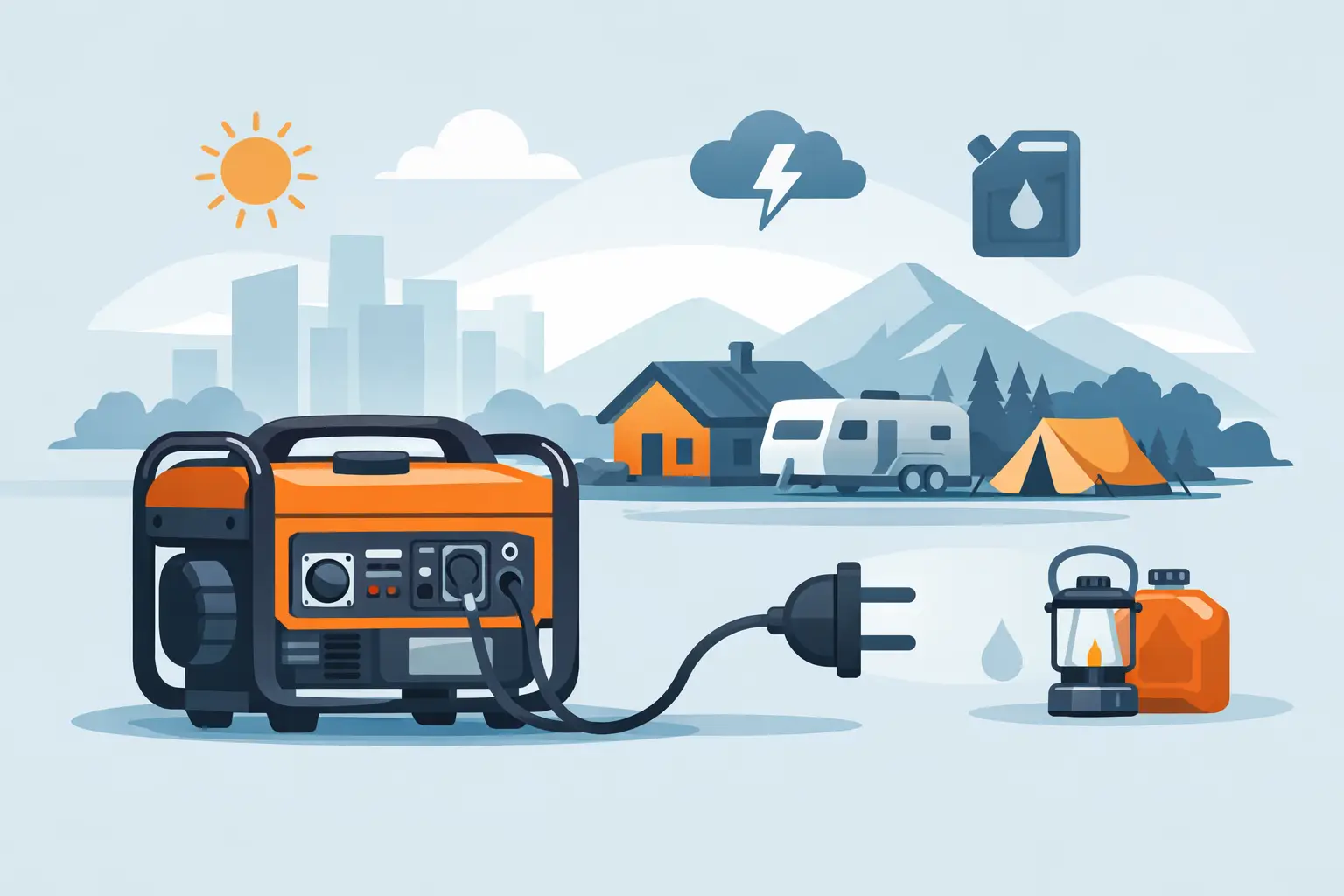
A power outage can turn a refrigerator, sump pump, phone charger, and home internet connection into immediate priorities. This guide to portable generators helps you choose a practical power source for backup power, job sites, camping, tailgating, and other everyday needs without paying for more capacity than you will use.
Portable generators range from compact inverter models that can charge electronics quietly to high-output units built to run several household essentials. The best choice depends on what you need to power, where you plan to use it, how often you expect to need it, and how much convenience matters to you.
Start With What You Need to Power
Generator shopping gets easier when you begin with appliances and tools, not generator size. Make a simple list of the items you would want running during an outage or away from home. For many households, that may include a refrigerator, a few lights, a phone charger, a router, a fan, and a sump pump. For work, it could mean a circular saw, air compressor, battery chargers, or portable lighting.
Every item has a running wattage, which is the power it needs while operating. Motors also require starting watts, sometimes called surge watts, to get moving. A refrigerator might run on roughly 600 to 800 watts but need a higher burst at startup. The same is true for pumps, power tools, and air conditioners.
Add the running watts of devices you plan to use at the same time, then account for the largest starting-watt requirement. Give yourself a reasonable cushion rather than choosing a generator that operates at its absolute limit. A unit that is constantly overloaded can trip breakers, waste fuel, and shorten its service life.
A compact 2,000-watt inverter generator can be a smart fit for charging devices, lighting, a small appliance, and some recreational use. Models in the 3,000- to 5,000-watt range often suit basic home backup needs or active job sites. Larger portable generators can support more appliances, but they consume more fuel, create more noise, and require more storage space.
Guide to Portable Generators by Type
The two main choices are conventional portable generators and inverter generators. Both can provide dependable portable power, but they serve different priorities.
Conventional generators
Conventional generators are often the value-focused choice when you need higher output for the price. They are common for construction work, larger outdoor equipment, and emergency home backup. Many offer multiple outlet types and longer run times with a larger fuel tank.
The trade-off is that they are generally louder and heavier than inverter models. Their electrical output may also be less refined, which can make them a less desirable option for sensitive electronics unless the model specifically supports clean power delivery.
Inverter generators
Inverter generators adjust engine speed based on demand, helping reduce fuel use and noise when the load is light. They typically produce cleaner, more stable power for laptops, phones, TVs, gaming systems, and other sensitive electronics.
These generators are popular for camping, tailgating, apartment-adjacent outdoor use, and homeowners who want a quieter backup option. They can cost more per watt than conventional models, and smaller units may not run high-demand appliances. Some models can connect in parallel with a matching generator when you need more power later.
Dual-fuel and propane-ready options
A dual-fuel generator can run on gasoline and propane. This flexibility is useful during extended outages, when one fuel source may be easier to find or store than another. Gasoline often delivers more rated wattage, while propane stores longer in a properly handled tank and does not require the same fuel stabilizer planning.
The right fuel setup depends on your storage space, local availability, and intended use. If you use a generator only occasionally for emergency backup, propane capability can be especially convenient. If you need maximum output for tools or frequent use, gasoline may better match your needs.
Pay Attention to Features That Make Use Easier
Wattage matters, but the everyday details determine whether a generator is convenient when you need it. Look at the outlet layout before buying. Standard 120-volt outlets handle many basics, while RV-ready outlets, 240-volt outlets, USB ports, and transfer-switch-ready connections can be useful for specific setups.
Electric start is a welcome feature for shoppers who do not want to rely on a recoil cord, especially in bad weather. A battery-maintainer connection or remote start can add convenience, though these features usually raise the price. Wheels and folding handles make a major difference on heavier units, but remember that even a wheeled generator may be difficult to move over stairs, mud, or loose gravel.
Run time should be reviewed at a stated load, usually 25% or 50%, rather than treated as a guaranteed all-day number. A generator running a refrigerator, lights, and a few chargers will use fuel differently than one supporting a space heater or large power tools. Low-oil shutdown, overload protection, fuel gauges, and carbon monoxide shutoff are worthwhile safety-focused features for many buyers.
Noise is another real-world consideration. A conventional job-site generator may be perfectly suitable in an open work area but frustrating at a campground or close to neighboring homes. Check the decibel rating and consider where the generator will operate, not just where it will be stored.
Use a Portable Generator Safely
A generator should always operate outdoors, far from doors, windows, vents, garages, crawl spaces, and covered patios. Carbon monoxide is odorless and dangerous. Never run a generator inside a house, garage, shed, basement, or other enclosed space, even if doors or windows are open.
Keep the unit on a stable, dry surface and protect it from rain using a generator-rated canopy or cover that preserves airflow. Do not place a running generator under an enclosed tent or improvised shelter. Let the engine cool before refueling, and store fuel in approved containers away from ignition sources.
For home backup, plug appliances directly into the generator using properly rated outdoor extension cords, or have a licensed electrician install a transfer switch. Never connect a generator directly to a home wall outlet. This unsafe practice, often called backfeeding, can damage equipment and create a serious hazard for utility workers and your household.
Before each use, check these essentials:
- Confirm the generator is outdoors with clear airflow on every side.
- Inspect cords for damage and use cords rated for the expected load.
- Check oil and fuel levels before starting the engine.
- Test carbon monoxide and smoke alarms inside the home.
- Keep children and pets away from the hot engine and exhaust area.
Plan for Storage and Maintenance
A generator is most useful when it starts quickly after months of sitting. Store it in a clean, dry area after the engine has cooled. If it uses gasoline, follow the manufacturer guidance for fuel stabilizer and storage intervals. Old fuel is a common reason generators fail to start when an outage arrives.
Run the generator periodically according to the owner’s manual, and keep up with oil changes, air-filter service, and spark plug checks. It is also smart to keep compatible extension cords, fresh oil, a funnel, and the correct fuel supply together in an accessible location. For a dual-fuel model, check propane hose connections and tank condition before you need emergency power.
If you are buying for storm preparedness, think beyond the generator itself. A refrigerator thermometer, battery-powered lighting, portable power banks, and a basic supply of shelf-stable food can help your household stay more comfortable while power is restored.
Choose Capacity for Your Real Routine
The most expensive generator is not always the best value, and the smallest option is not always the easiest to live with. A homeowner who only needs food protection, communication, and a few lights may be better served by a quieter mid-size inverter unit than a large job-site model. A contractor with high-draw tools may need higher output and rugged conventional-generator value instead.
Consider your likely use first, then compare wattage, fuel flexibility, outlet options, portability, and safety features. With the right generator and a simple maintenance plan, you can be ready to keep essential tasks moving when the grid cannot.
A power outage can turn a refrigerator, sump pump, phone charger, and home internet connection into immediate priorities. This guide to portable generators helps you choose a practical power source for backup power, job sites, camping, tailgating, and other everyday needs without paying for more capacity than you will use.
Portable generators range from compact inverter models that can charge electronics quietly to high-output units built to run several household essentials. The best choice depends on what you need to power, where you plan to use it, how often you expect to need it, and how much convenience matters to you.
Start With What You Need to Power
Generator shopping gets easier when you begin with appliances and tools, not generator size. Make a simple list of the items you would want running during an outage or away from home. For many households, that may include a refrigerator, a few lights, a phone charger, a router, a fan, and a sump pump. For work, it could mean a circular saw, air compressor, battery chargers, or portable lighting.
Every item has a running wattage, which is the power it needs while operating. Motors also require starting watts, sometimes called surge watts, to get moving. A refrigerator might run on roughly 600 to 800 watts but need a higher burst at startup. The same is true for pumps, power tools, and air conditioners.
Add the running watts of devices you plan to use at the same time, then account for the largest starting-watt requirement. Give yourself a reasonable cushion rather than choosing a generator that operates at its absolute limit. A unit that is constantly overloaded can trip breakers, waste fuel, and shorten its service life.
A compact 2,000-watt inverter generator can be a smart fit for charging devices, lighting, a small appliance, and some recreational use. Models in the 3,000- to 5,000-watt range often suit basic home backup needs or active job sites. Larger portable generators can support more appliances, but they consume more fuel, create more noise, and require more storage space.
Guide to Portable Generators by Type
The two main choices are conventional portable generators and inverter generators. Both can provide dependable portable power, but they serve different priorities.
Conventional generators
Conventional generators are often the value-focused choice when you need higher output for the price. They are common for construction work, larger outdoor equipment, and emergency home backup. Many offer multiple outlet types and longer run times with a larger fuel tank.
The trade-off is that they are generally louder and heavier than inverter models. Their electrical output may also be less refined, which can make them a less desirable option for sensitive electronics unless the model specifically supports clean power delivery.
Inverter generators
Inverter generators adjust engine speed based on demand, helping reduce fuel use and noise when the load is light. They typically produce cleaner, more stable power for laptops, phones, TVs, gaming systems, and other sensitive electronics.
These generators are popular for camping, tailgating, apartment-adjacent outdoor use, and homeowners who want a quieter backup option. They can cost more per watt than conventional models, and smaller units may not run high-demand appliances. Some models can connect in parallel with a matching generator when you need more power later.
Dual-fuel and propane-ready options
A dual-fuel generator can run on gasoline and propane. This flexibility is useful during extended outages, when one fuel source may be easier to find or store than another. Gasoline often delivers more rated wattage, while propane stores longer in a properly handled tank and does not require the same fuel stabilizer planning.
The right fuel setup depends on your storage space, local availability, and intended use. If you use a generator only occasionally for emergency backup, propane capability can be especially convenient. If you need maximum output for tools or frequent use, gasoline may better match your needs.
Pay Attention to Features That Make Use Easier
Wattage matters, but the everyday details determine whether a generator is convenient when you need it. Look at the outlet layout before buying. Standard 120-volt outlets handle many basics, while RV-ready outlets, 240-volt outlets, USB ports, and transfer-switch-ready connections can be useful for specific setups.
Electric start is a welcome feature for shoppers who do not want to rely on a recoil cord, especially in bad weather. A battery-maintainer connection or remote start can add convenience, though these features usually raise the price. Wheels and folding handles make a major difference on heavier units, but remember that even a wheeled generator may be difficult to move over stairs, mud, or loose gravel.
Run time should be reviewed at a stated load, usually 25% or 50%, rather than treated as a guaranteed all-day number. A generator running a refrigerator, lights, and a few chargers will use fuel differently than one supporting a space heater or large power tools. Low-oil shutdown, overload protection, fuel gauges, and carbon monoxide shutoff are worthwhile safety-focused features for many buyers.
Noise is another real-world consideration. A conventional job-site generator may be perfectly suitable in an open work area but frustrating at a campground or close to neighboring homes. Check the decibel rating and consider where the generator will operate, not just where it will be stored.
Use a Portable Generator Safely
A generator should always operate outdoors, far from doors, windows, vents, garages, crawl spaces, and covered patios. Carbon monoxide is odorless and dangerous. Never run a generator inside a house, garage, shed, basement, or other enclosed space, even if doors or windows are open.
Keep the unit on a stable, dry surface and protect it from rain using a generator-rated canopy or cover that preserves airflow. Do not place a running generator under an enclosed tent or improvised shelter. Let the engine cool before refueling, and store fuel in approved containers away from ignition sources.
For home backup, plug appliances directly into the generator using properly rated outdoor extension cords, or have a licensed electrician install a transfer switch. Never connect a generator directly to a home wall outlet. This unsafe practice, often called backfeeding, can damage equipment and create a serious hazard for utility workers and your household.
Before each use, check these essentials:
- Confirm the generator is outdoors with clear airflow on every side.
- Inspect cords for damage and use cords rated for the expected load.
- Check oil and fuel levels before starting the engine.
- Test carbon monoxide and smoke alarms inside the home.
- Keep children and pets away from the hot engine and exhaust area.
Plan for Storage and Maintenance
A generator is most useful when it starts quickly after months of sitting. Store it in a clean, dry area after the engine has cooled. If it uses gasoline, follow the manufacturer guidance for fuel stabilizer and storage intervals. Old fuel is a common reason generators fail to start when an outage arrives.
Run the generator periodically according to the owner’s manual, and keep up with oil changes, air-filter service, and spark plug checks. It is also smart to keep compatible extension cords, fresh oil, a funnel, and the correct fuel supply together in an accessible location. For a dual-fuel model, check propane hose connections and tank condition before you need emergency power.
If you are buying for storm preparedness, think beyond the generator itself. A refrigerator thermometer, battery-powered lighting, portable power banks, and a basic supply of shelf-stable food can help your household stay more comfortable while power is restored.
Choose Capacity for Your Real Routine
The most expensive generator is not always the best value, and the smallest option is not always the easiest to live with. A homeowner who only needs food protection, communication, and a few lights may be better served by a quieter mid-size inverter unit than a large job-site model. A contractor with high-draw tools may need higher output and rugged conventional-generator value instead.
Consider your likely use first, then compare wattage, fuel flexibility, outlet options, portability, and safety features. With the right generator and a simple maintenance plan, you can be ready to keep essential tasks moving when the grid cannot.













Leave a comment