


Best Wall Decor for Living Room Spaces
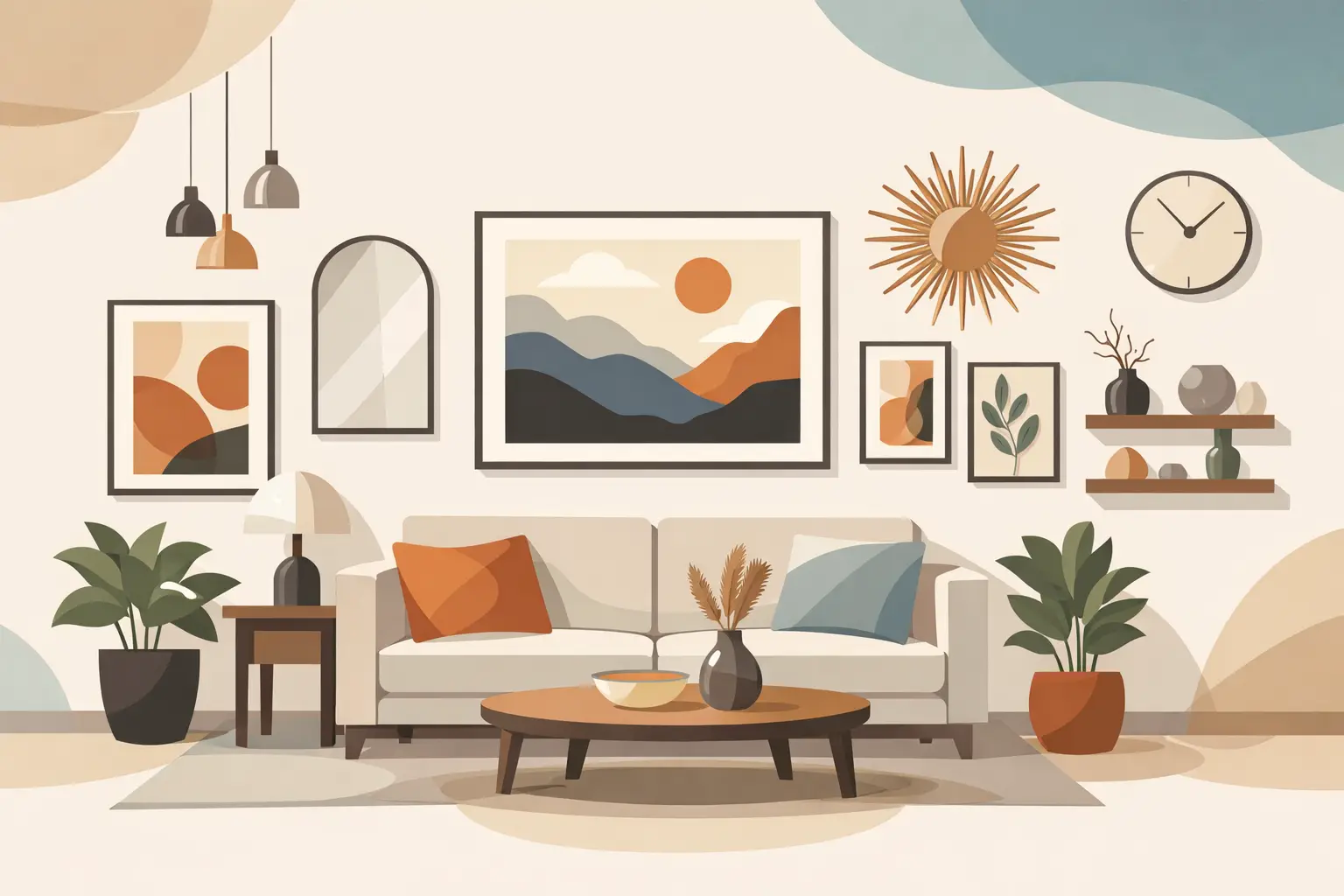
A blank wall can make even a well-furnished space feel unfinished. The best wall decor for living room areas is not just about filling empty space – it is about adding balance, personality, and the right visual weight so the whole room feels pulled together.
If you have ever bought a framed print that looked too small once it was on the wall, or picked a statement piece that clashed with your sofa, you already know the real challenge. Good wall decor has to work with your room size, furniture scale, lighting, and everyday style. The right choice makes the space feel intentional. The wrong one can make it feel crowded, random, or flat.
How to choose the best wall decor for living room style
Start with the wall itself. A large wall behind a sofa needs a different approach than a narrow wall between two windows. Before choosing anything, look at the width of the furniture below it, the ceiling height, and how much visual activity is already in the room from rugs, pillows, shelving, or patterned upholstery.
Scale matters more than people expect. As a general rule, wall decor above a sofa or console usually looks best when it covers about two-thirds to three-quarters of the furniture width. Too small, and it disappears. Too large, and it takes over the room.
Style matters too, but matching everything perfectly is usually not the goal. A modern living room can benefit from warmer, textured pieces so it does not feel cold. A traditional room often looks fresher with cleaner frames or a simpler layout. If your space mixes finishes like wood, metal, glass, and fabric, wall decor should help connect those elements rather than introduce even more visual noise.
Best wall decor for living room layouts that actually work
The easiest option is a single oversized piece. Large framed art, a canvas, or a bold decorative panel creates a clean focal point and usually takes less effort than arranging multiple smaller items. This works especially well in apartments, open-plan homes, and living rooms that already have enough detail in the furniture.
A gallery wall is another strong choice, but it works best when there is some structure behind it. That does not mean everything has to match. It means the arrangement should have a clear shape, consistent spacing, or a repeating element such as similar frame finishes, a common color palette, or a theme.
Mirrors are one of the most practical options because they do double duty. They decorate the wall and help reflect light, which is especially useful in smaller living rooms or spaces that do not get much natural sunlight. A round mirror softens boxy furniture lines, while a rectangular mirror can reinforce a more tailored, symmetrical setup.
Wall shelves can also work well, especially if you want function and decor in one place. They give you room for small framed pieces, candles, vases, and sculptural accents. The trade-off is maintenance. Shelves need editing. If they get too full, the room starts to look busy instead of styled.
Textile wall decor, including woven pieces, macrame, or fabric panels, brings in softness and texture. This is a smart move if your living room has a lot of hard surfaces like leather seating, metal accents, stone, or glass. It also helps create a more relaxed look without relying on extra furniture or floor decor.
Picking the right decor for your room size
Small living rooms usually benefit from simpler choices. One medium-to-large piece of art, a mirror, or a tight pair of coordinated prints often looks better than a complex arrangement of many small items. Too many pieces can make a compact room feel cluttered fast.
In larger living rooms, you have more flexibility, but empty space still needs a plan. A big wall can handle oversized art, a wide triptych, a larger mirror, or a thoughtfully arranged gallery wall. If the room has high ceilings, vertical pieces can help draw the eye upward and make the space feel more balanced.
For open-concept spaces, wall decor needs to relate to the rest of the area. If your living room flows into the dining room or kitchen, repeating a color or material can help the whole space feel connected. That does not mean buying the same decor for every wall. It means choosing pieces that look like they belong in the same home.
Matching wall decor to popular living room styles
Modern living rooms usually look best with abstract art, black or metallic frames, minimal mirrors, and decor with strong shape and clean lines. In these spaces, less is often more. One larger statement piece can outperform several smaller accents.
Farmhouse and rustic rooms tend to work well with wood-framed art, vintage-inspired signs, botanical prints, and textured wall pieces. The risk here is going too theme-heavy. If every piece looks overtly rustic, the room can start to feel staged instead of lived in.
Boho spaces often suit layered gallery walls, woven hangings, natural materials, and relaxed asymmetry. This style gives you more freedom, but it still needs restraint. A few varied textures and earthy tones usually look better than trying to display everything at once.
Classic and transitional living rooms pair nicely with symmetrical arrangements, traditional artwork, mirrors, and framed sets. These rooms benefit from balance and polish, so spacing and alignment matter more.
If your style is mixed or still evolving, neutral wall decor is often the safest investment. Black-and-white prints, soft abstract art, mirrors, and natural-texture pieces are easier to move between homes or refresh with new furniture later.
What to avoid when shopping for living room wall decor
One of the most common mistakes is choosing decor based only on how it looks in a product photo. A piece can be attractive on its own and still be wrong for your room. Check dimensions every time. Size is not a detail – it is often the difference between a finished look and a disappointing one.
Another mistake is buying wall decor that competes with everything else in the room. If your sofa has a bold pattern, your rug is colorful, and your accent chairs already make a statement, quieter wall decor may be the better call. On the other hand, if your furniture is very neutral, the wall is your chance to introduce shape, color, or contrast.
People also tend to hang pieces too high. Wall decor should usually feel visually connected to the furniture beneath it. When art floats too far above a sofa, it looks disconnected from the room layout.
Finally, avoid filling every blank wall just because it is there. Some empty space is useful. It gives the eye a place to rest and helps your featured decor stand out.
Budget-friendly ways to get the best wall decor for living room spaces
A polished look does not always require expensive artwork. Framed prints, decorative mirrors, wall panels, floating shelves, and multipiece sets can all create impact without stretching your budget. The key is choosing items that look intentional together.
Sets can be especially useful if you want an easier shopping process. Coordinated wall decor takes some of the guesswork out of matching sizes, colors, and layouts. This is a practical option for shoppers who want a finished look without spending hours comparing pieces across different stores.
If you want more flexibility, start with one anchor piece and build around it over time. That approach usually leads to a more natural result, and it makes it easier to stay on budget. You do not have to complete every wall at once.
For shoppers who want variety and convenience in one place, browsing broad home selections can save time compared with jumping between specialty shops. Stores like Vespena.com make that process easier by offering different decor styles, home accents, and everyday essentials in one streamlined shopping experience.
Final details that make wall decor look better
Once you have chosen your decor, placement becomes the finishing step. Measure before hanging, keep spacing consistent in grouped arrangements, and step back before making anything permanent. Painter’s tape templates can help you preview placement on the wall without guesswork.
Lighting also changes how wall decor reads in a room. A mirror near a window can brighten the space, while art with subtle texture often looks better with nearby lamps or warm overhead lighting. If a piece feels underwhelming, the issue may be placement or lighting rather than the decor itself.
The best choice is usually the one that fits your space, your budget, and how you actually live. If your living room is where you relax, host friends, watch movies, and spend most evenings, the wall decor should make that room feel more like yours – easy to enjoy every time you walk in.









Leave a comment