


LED Headlights vs Halogen Bulbs: Which Fits?
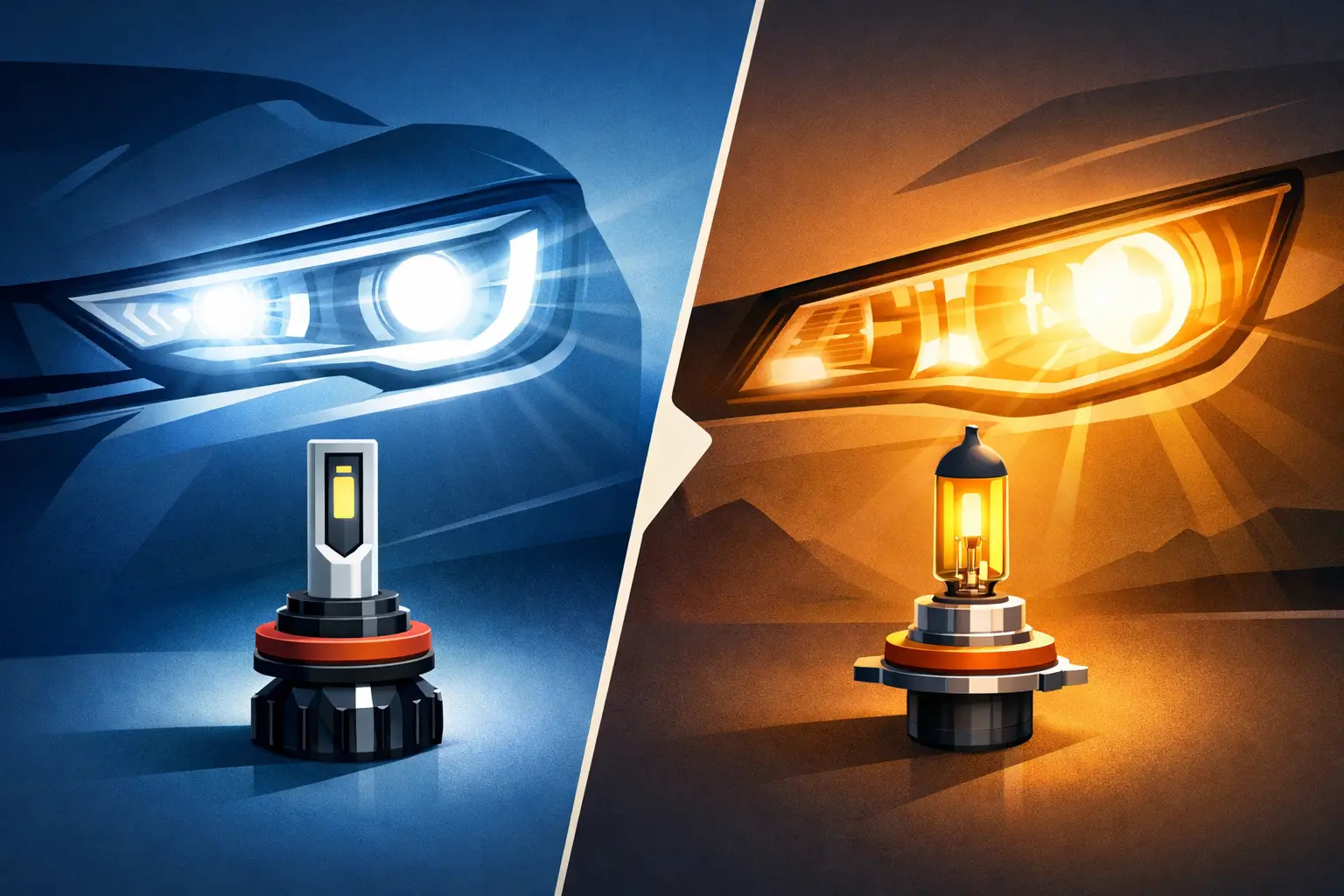
That late-night drive gets a lot more stressful when your headlights feel weak, yellow, or uneven. If you are weighing led headlights vs halogen bulbs, the right pick comes down to how you drive, what your vehicle supports, and how much upgrade value you want for the money.
For many drivers, this is not really a debate about which option sounds newer. It is about visibility, replacement cost, installation ease, and whether the upgrade feels worth it in everyday use. Some shoppers want the simplest swap at the lowest price. Others want a cleaner look, better brightness, and a longer-lasting solution. Both choices can make sense, but they are built for different priorities.
LED headlights vs halogen bulbs: the real difference
Halogen bulbs are the long-running standard on many vehicles. They use a tungsten filament inside a halogen gas-filled bulb, which creates light in a warm yellow tone. They are easy to find, generally affordable, and often straightforward to replace.
LED headlights work differently. Instead of a filament, they use light-emitting diodes to produce a brighter, whiter light with lower power draw. In many cases, they also last much longer than halogen bulbs. That sounds like an easy win, but compatibility and beam pattern matter more than many buyers expect.
If your vehicle was designed around halogen housings, dropping in an LED replacement does not always guarantee better performance. A poor-fit LED bulb can create glare, uneven output, or a beam pattern that looks bright up close but performs worse on the road. That is why the comparison is not just about brightness on the box.
Brightness and road visibility
This is where LEDs usually get the most attention, and for good reason. A quality LED headlight bulb often produces a sharper, whiter light that makes lane markings, signs, and road edges easier to see. On dark suburban roads or highways with limited street lighting, that can feel like a noticeable upgrade.
Halogen bulbs tend to produce a softer, warmer beam. Some drivers actually prefer that color temperature in rain, fog, or snow, where very white light can create more glare or eye fatigue. So while LED often wins on raw brightness, halogen can still feel more comfortable in certain weather and driving conditions.
The key detail is control. A well-designed halogen setup can outperform a poorly matched LED conversion. If you are shopping for an upgrade, it helps to look beyond lumen claims and pay attention to fitment, housing compatibility, and intended beam pattern.
Color temperature matters more than most people think
Many LED bulbs create a cool white look that gives vehicles a more modern appearance. That is a big selling point for drivers who want both function and style. The cleaner color can also make nighttime visibility feel more immediate.
Halogen bulbs usually produce a warmer yellow-white output. It may not look as crisp, but it can be easier on the eyes for some drivers. If your top priority is a factory-style replacement with familiar road appearance, halogen still has a place.
Cost upfront and over time
If price is your first filter, halogen bulbs are usually the easier choice. They are widely available, budget-friendly, and practical for drivers who need a quick replacement without spending much. For an older vehicle or a basic commuter car, that can be the smartest route.
LED headlights usually cost more upfront. That higher initial price can still make sense if you keep your vehicle for years, drive often at night, or want a longer-lasting upgrade that reduces replacement frequency. Over time, the value can shift in LED’s favor, especially if you are tired of replacing bulbs more often than expected.
This is where shopping convenience matters. Many drivers do not want to compare dozens of confusing listings just to find a bulb that fits their make and model. A broad automotive accessories selection with clear fitment options makes the buying process much easier, especially when you want to balance price, features, and compatibility in one place.
Lifespan and maintenance
LEDs generally last much longer than halogen bulbs. That is one of their strongest advantages. If you drive a lot, commute before sunrise, or regularly travel at night, longer service life can be a real benefit, not just a technical spec.
Halogen bulbs burn out sooner because the filament wears down over time. That does not make them bad. It just means they are more of a routine replacement item. For drivers who want the lowest entry cost and do not mind occasional maintenance, that trade-off is easy to accept.
LEDs are not completely maintenance-free, though. Heat management matters. Lower-quality LED bulbs can suffer from poor cooling, flickering, or early failure. Buying based only on the cheapest price point can erase the lifespan advantage pretty quickly.
Installation and vehicle compatibility
This is the section many shoppers skip, and it is often the one that causes the most frustration. Halogen bulbs are usually the easiest direct replacement because the vehicle was likely designed around them. In many cases, you remove the old bulb, install the new one, and you are done.
LED replacements can be simple, but not always. Some require extra space behind the housing, built-in fans or heat sinks, or additional decoders to prevent error messages or flickering. On some vehicles, installation is still straightforward. On others, it becomes more of a project than expected.
When an LED upgrade makes sense
If your vehicle supports LED replacements well and you want brighter light, modern styling, and longer service life, LED is often the better choice. It is especially appealing for drivers who spend a lot of time on the road after dark.
When halogen is still the smart buy
If you want factory-style simplicity, lower upfront cost, and dependable plug-and-play replacement, halogen remains a solid option. It also makes sense when you are maintaining an older vehicle and want to keep ownership costs predictable.
Performance in daily driving
For city drivers, the gap between halogen and LED may feel smaller than expected. If most of your driving happens on well-lit roads, halogen bulbs can still provide enough visibility without pushing you into a higher-cost upgrade.
For rural driving, highway travel, or long commutes in dark conditions, LED headlights often show their value faster. Better reach and clearer contrast can make nighttime driving less tiring. That is where many shoppers feel the upgrade was worth it almost immediately.
Still, there is no universal winner for every driver. If you mostly need a fast, affordable replacement, halogen is hard to beat. If you want more output and a newer look, LED usually brings more upside.
Style, efficiency, and buying confidence
LED headlights have become popular partly because they change the look of a vehicle so quickly. The whiter light feels newer and cleaner, which matters to drivers who care about appearance as much as function. That makes LED a common choice for personalization, not just replacement.
Halogen bulbs are less flashy, but they are familiar, affordable, and dependable. For many everyday drivers, that is exactly the point. Not every upgrade has to be dramatic. Sometimes the best choice is the one that gets you back on the road quickly, works as expected, and stays within budget.
When you are comparing options, it helps to shop where you can easily browse different lighting styles, vehicle-fit solutions, and price points without wasting time. For drivers who want that mix of selection, value, and straightforward ordering, Vespena makes it easier to find automotive accessories that fit both practical needs and upgrade goals.
Which one should you choose?
Choose halogen if your priorities are low cost, easy replacement, and factory-style performance. It is the better fit for budget-conscious maintenance, older vehicles, and drivers who do not need a major change in nighttime visibility.
Choose LED if you want brighter output, a more modern appearance, and longer lifespan, and you are willing to pay more upfront for those benefits. It is often the better fit for frequent night drivers and shoppers looking for a more noticeable upgrade.
The best answer is usually not the most advanced option. It is the one that matches your vehicle, your budget, and the way you actually drive. A good headlight choice should feel simple once it is installed – better visibility, less hassle, and more confidence every time the sun goes down.













Leave a comment