


Minimalist Travel Packing Planner: Pack Light in 15 Minutes
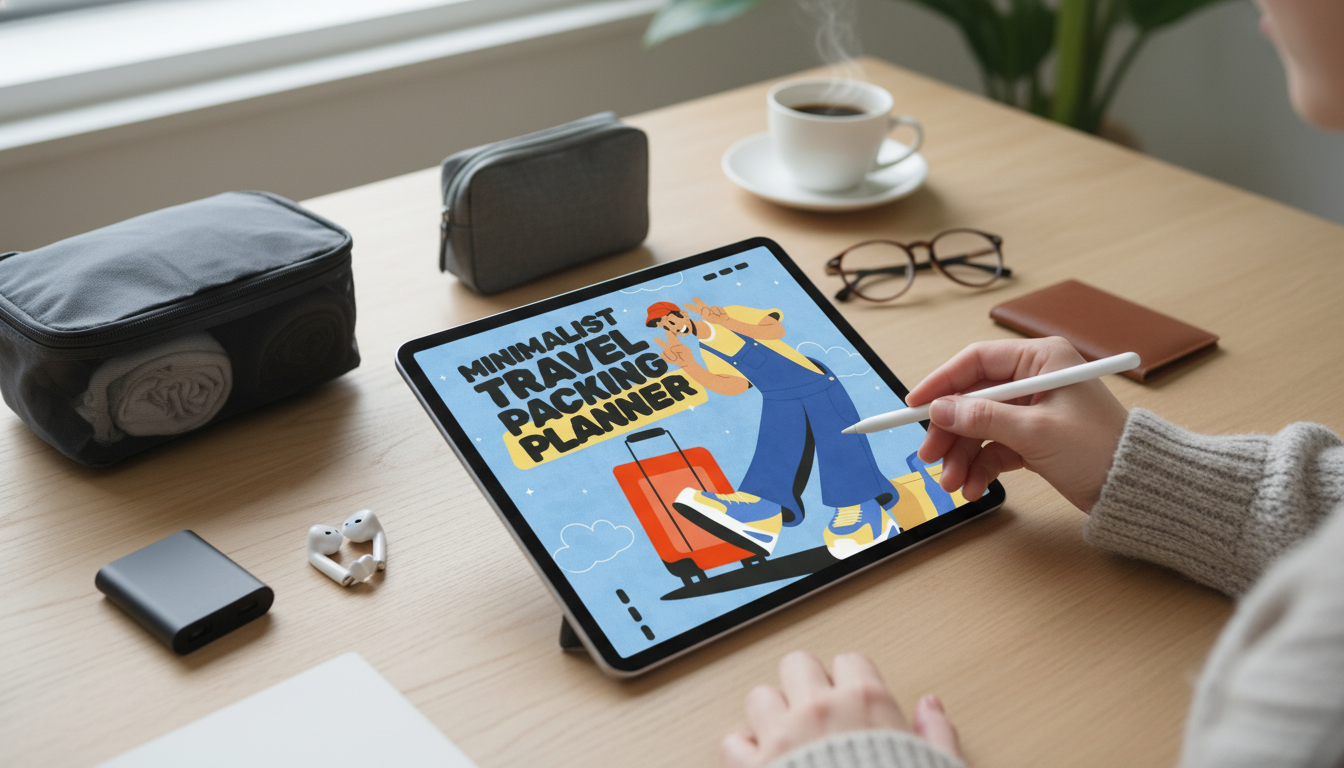
Minimalist Travel Packing Planner: Pack Light, Stay Organized, Travel Calm
Packing light gets easier when decisions are made ahead of time. A minimalist packing system keeps essentials visible, reduces overpacking, and helps prevent last-minute stress. The goal isn’t to “pack with nothing”—it’s to pack with intention, so you can move comfortably, find what you need fast, and start your trip feeling calm.
Why minimalist packing works (and why it feels so good)
Minimalist packing delivers a surprisingly big payoff because it reduces friction at every stage of travel.
- Fewer items means fewer decisions. Outfits, chargers, toiletries, and documents are easier to track when there’s less to manage.
- A lighter bag moves faster. Airports, trains, stairs, and cobblestones get easier when your bag isn’t fighting you.
- Less “just in case” creates space for what matters. Comfort, weather coverage, and versatility outperform novelty and duplicates.
- A consistent checklist prevents repeat mistakes. It helps avoid duplicates and catches common misses like adapters or medications.
The 15-minute packing workflow
This quick workflow works because it starts with constraints (weather, dress code, activities) and builds outward from there.
- Confirm trip facts. Dates, weather highs/lows, dress code, laundry access, and your main activities. If you’re traveling internationally, review destination-specific health guidance from the CDC Travelers’ Health.
- Choose a base color palette. Pick 2 neutrals plus 1 accent color so almost everything can mix and match.
- Pick shoes first (usually 1–2 pairs). Build outfits that work with your primary walking shoes; only add a second pair if the trip truly requires it.
- Build outfits from “modules.” Aim for tops that go day-to-night, one warm layer, and one rain/wind option.
- Lock your toiletry kit. Keep it to travel-size essentials in refillable containers, and restock after each trip so it stays ready.
- Final sweep by categories. Documents, health, tech, clothing, toiletries, comfort, extras. This is where you catch the small stuff without spiraling into overpacking.
Use a digital packing planner to stay consistent across trips
The fastest packers aren’t guessing every time—they’re reusing a system. A digital packing planner can store master lists for different trip styles (weekend, business, warm weather, cold weather), then let you copy and tweak instead of rebuilding from scratch.
- Reusable checklists speed up packing while still leaving room to customize for your destination.
- Notes fields help track what you never used (so you can cut it next time) and what you missed (so it becomes part of your “never forget” list).
- A calmer routine replaces the “dump everything on the bed” method with a simple, step-by-step flow.
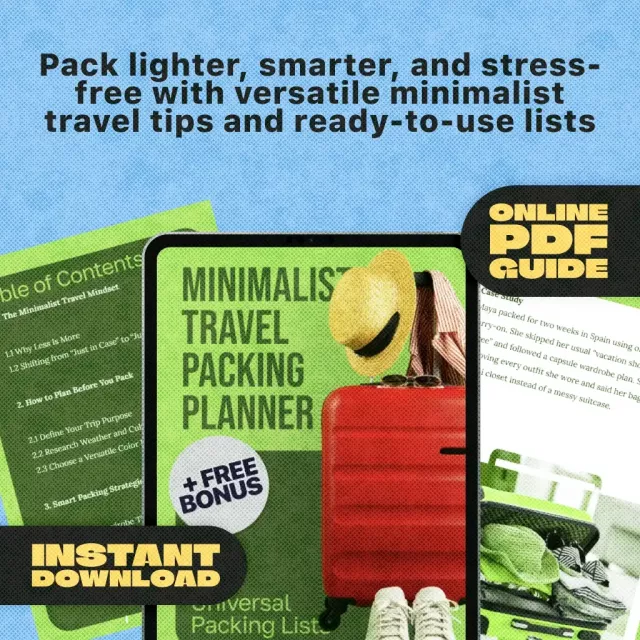
If you want a ready-made structure you can reuse for every trip, the Minimalist Travel Packing Planner | Digital Packing Guide for Light, Smart & Stress-Free Trips is designed to function as a master template you duplicate and refine over time.
Core minimalist packing list (the essentials that earn their spot)
Simple packing planner table: what to pack by trip length
| Category | 2–3 days | 4–7 days | 8–14 days (with laundry) |
|---|---|---|---|
| Tops | 2–3 | 4–5 | 5–6 |
| Bottoms | 1–2 | 2–3 | 2–3 |
| Mid-layer (sweater/fleece) | 1 | 1 | 1 |
| Outer layer (rain/wind) | 1 (if needed) | 1 | 1 |
| Shoes | 1–2 pairs | 1–2 pairs | 2 pairs |
| Underwear/socks | 3–4 | 5–7 | 7–8 |
| Sleepwear | 1 | 1 | 1 |
| Workout/swim (optional) | 0–1 | 0–1 | 0–1 |
Packing light without sacrificing comfort
- Choose quick-dry fabrics. They’re easier to sink-wash and can dry overnight, reducing how much you need to bring.
- Limit single-use items. Anything that only works with one outfit (or one moment) is a strong candidate to cut.
- Use a 1-in, 1-out rule. If a new item goes in, remove something similar to keep volume stable.
- Keep an “always packed” pouch. Spare charger, basic meds, bandages, earplugs, and a pen can live in your bag between trips.
- Add one small recovery habit. Hydration, stretching, and eye breaks improve how you feel on long travel days. If screen time and cabin air leave you feeling worn out, a compact relaxation device like the Portable Eye Massager can be an easy add that doesn’t create clutter.
For carry-ons, follow the TSA’s latest guidance for liquids, gels, and aerosols. The standard reference is the TSA 3-1-1 liquids rule, and it’s worth double-checking if your departure airport or destination has additional restrictions.
Common minimalist packing mistakes (and quick fixes)
A ready-to-use option: Minimalist Travel Packing Planner (digital)
A repeatable checklist is the simplest way to make minimalist packing feel automatic. The Minimalist Travel Packing Planner | Digital Packing Guide for Light, Smart & Stress-Free Trips is built to help keep a minimalist baseline while still customizing for weather, activities, and work vs. leisure—so each trip is faster to pack for than the last.
FAQ
How do you pack light for a week without doing laundry every day?
Use a capsule-style palette and aim for 4–5 tops, 2–3 bottoms, 5–7 underwear/socks, plus one mid-layer and one outer layer. Choose quick-dry fabrics and plan one simple midweek sink-wash for essentials if needed.
What’s the easiest way to stop overpacking?
Decide your shoes and color palette first, then cap specialty items to one or two. Use a checklist that separates essentials from nice-to-haves, and commit to a bag-size limit (carry-on or personal item) before you select clothing.
What liquids can go in a carry-on?
In the U.S., most travelers follow the TSA 3-1-1 rule: liquids in containers up to 3.4 oz (100 mL), all fitting in one quart-size bag, with one bag per passenger. Rules can vary by airport and country, so confirm current requirements before departure.











Leave a comment