


Universal Seat-Back Organizer for Toyota, Ford & Honda
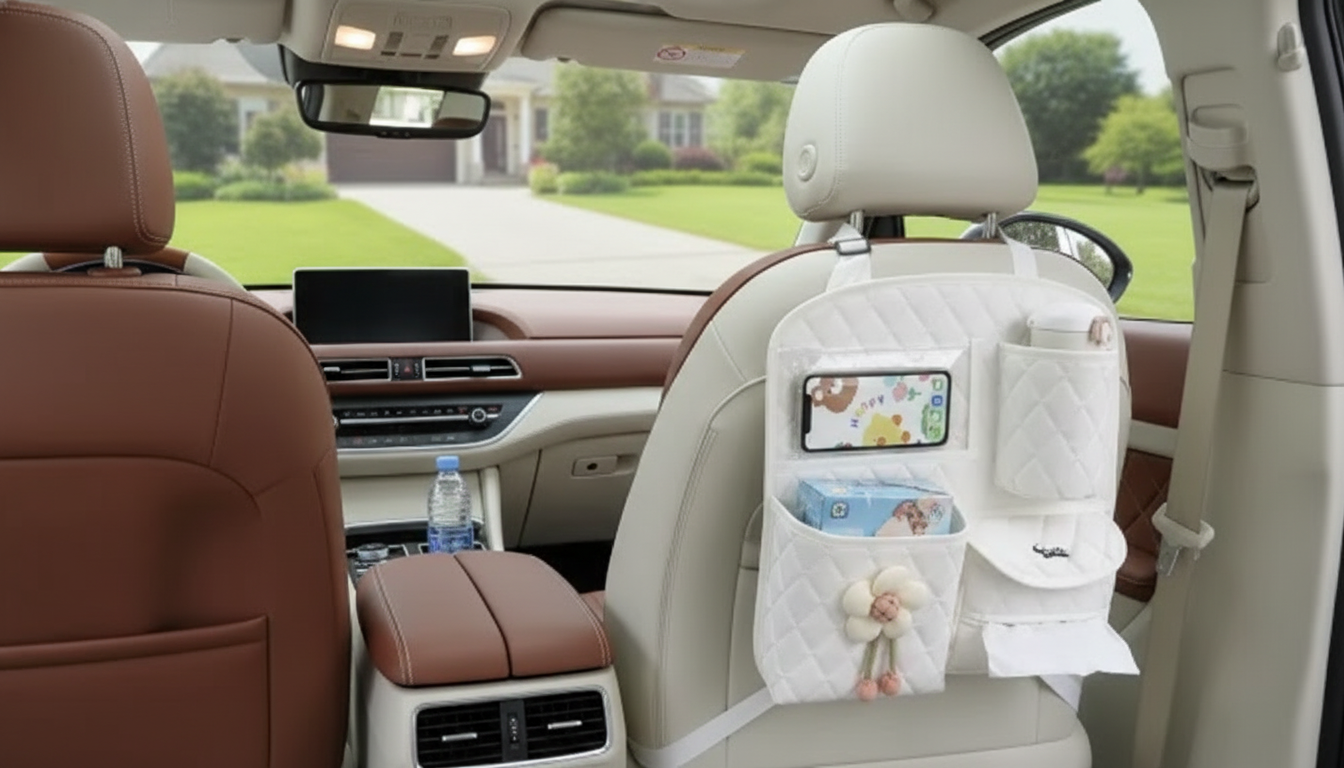
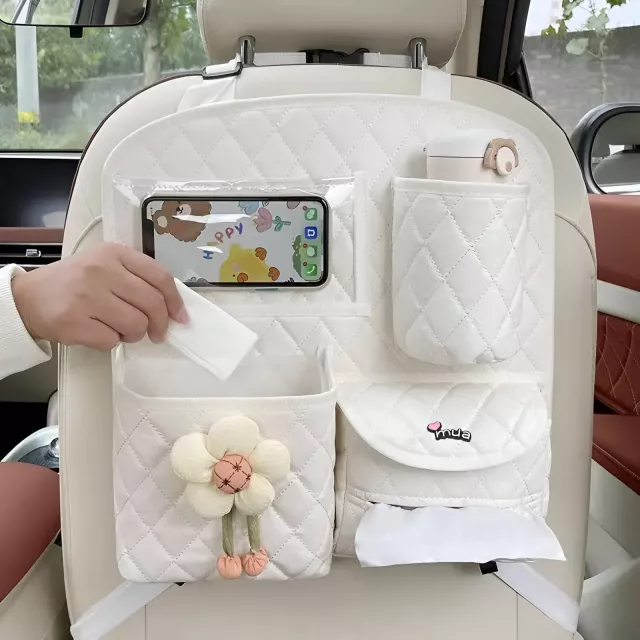
Universal Car Seat Back Storage Organizer for Toyota, Ford, and Honda
A seat back organizer keeps the back seat tidy by giving kids’ items, travel essentials, and small electronics a dedicated place. This universal organizer is designed to sit neatly on the back of a front seat, adding accessible storage while helping protect the seat from scuffs and messes during everyday driving and longer trips.
What This Seat Back Organizer Solves
Even a short drive can turn into a mini scavenger hunt when essentials disappear between seats or roll onto the floor. A seat back organizer creates structure in the second row so small items stay visible, reachable, and less likely to migrate under the seats.
- Reduces loose items on the floor that can roll under seats and become hard to reach
- Creates consistent “home” spots for snacks, wipes, tissues, small toys, and charging cables
- Helps keep kids’ travel items within reach without passing things from the front seat
- Adds a barrier that can help minimize shoe marks and debris on seat backs
For families, this often means fewer stops to search for a dropped toy, fewer “Can you hand me…?” requests from the back seat, and a cabin that looks more put together at the end of the day.
Fit and Compatibility for Toyota, Ford, and Honda Interiors
A universal mounting design is meant to work across many seat styles found in Toyota, Ford, and Honda vehicles. It typically performs best when the front seat has a headrest (or an upper anchor area) that allows top straps to stay tight so the organizer lies flat and stable.
- Universal mounting approach intended for a wide range of front-seat shapes found across Toyota, Ford, and Honda lineups
- Works best when the front seat has a headrest or attachment points that allow the organizer to sit flat and stable
- Recommended for sedans, compact SUVs, and family SUVs where rear passengers want quick access to compartments
- Before purchase, confirm there is enough clearance so the organizer won’t press into a rear-facing child seat or block legroom
Quick Fit Check Before Installing
| Checkpoint | What to look for | Why it matters |
|---|---|---|
| Headrest/upper anchor area | A secure spot for the top straps to hold tension | Prevents sagging and keeps pockets accessible |
| Seat back shape | A relatively smooth surface so the organizer lays flat | Improves stability and reduces shifting on bumps |
| Rear passenger legroom | Enough space so knees and feet don’t constantly rub the organizer | Helps avoid frequent readjustment and wear |
| Child seat positioning | Organizer does not interfere with a car seat’s required placement | Maintains safe installation and proper clearance |
Storage Layout That Stays Practical on the Road
The most useful organizers aren’t the ones with the most compartments—they’re the ones with a layout that matches real-life routines. Multiple pockets make it easier to group items by purpose, so passengers can grab what they need quickly without emptying everything onto the seat.
- Multiple pockets support sorting by category (snacks, wipes, toys, charging gear, small books)
- A dedicated spot for quick-grab items helps reduce repeated rummaging while driving
- Good organization supports calmer rides—kids can reach what they need without disrupting the front seat
- Works well for family routines: school drop-off, weekend sports, errands, and road trips
A simple setup that works well: keep wipes and tissues high for easy access, place charging cords and a power bank in a middle pocket, and reserve lower pockets for heavier items like small water bottles (when appropriate) or compact books.
Installation and Everyday Use
Seat back organizers are most effective when installed taut and loaded thoughtfully. If the organizer tilts, swings, or bows outward, it’s usually a strap-tension or weight-distribution issue.
- Attach the organizer to the back of the front seat and tighten straps so it sits level
- Load heavier items into lower pockets to keep the organizer balanced and reduce sway
- Keep choking hazards and small loose parts out of reach of toddlers; use higher pockets for adult-only items
- Periodically retighten straps after the first few days of use as materials settle
If a rear-facing child safety seat is installed, verify that the organizer doesn’t push against it or alter required clearances. For up-to-date child passenger safety guidance, refer to NHTSA’s car seat resources and the CDC’s child passenger safety information.
Cleaning, Care, and Keeping the Cabin Looking New
When This Organizer Is the Right Choice
In-Stock Picks to Build a More Organized, Comfortable Ride
- Universal Car Seat Back Storage Organizer for Toyota, Ford, and Honda ($23.97)
- 13-Color RGB LED Night Light for Kids ($10.97) for calmer evening rides and overnight stops
- Portable Eye Massager ($5.97) for decompressing during breaks on longer drives
- 3-in-1 Bottle Gap Cleaner Brush ($2.06) to help keep drinkware and small parts cleaner between deep washes
FAQ
Will a universal seat back organizer fit most Toyota, Ford, and Honda models?
It’s designed for broad compatibility, but the best results come from checking that your front seat has a solid headrest/upper anchor area, a seat-back shape that lets it lay flat, and enough rear passenger clearance. If you use child seats, confirm the organizer won’t interfere with proper placement.
Can it be used with a child safety seat installed in the back?
It can work in many setups as long as it does not interfere with correct child seat installation or required clearances. Double-check spacing after installation and keep small items secured and age-appropriate for the child riding behind it.
How do you keep it from swinging or sagging while driving?
Tighten the straps firmly so the organizer sits level, place heavier items in lower pockets, and avoid overloading any single compartment. Recheck strap tension after the first few days since materials can settle with use.














Leave a comment