


Elevated Ceramic Cat Bowl Set for Cleaner, Calmer Meals
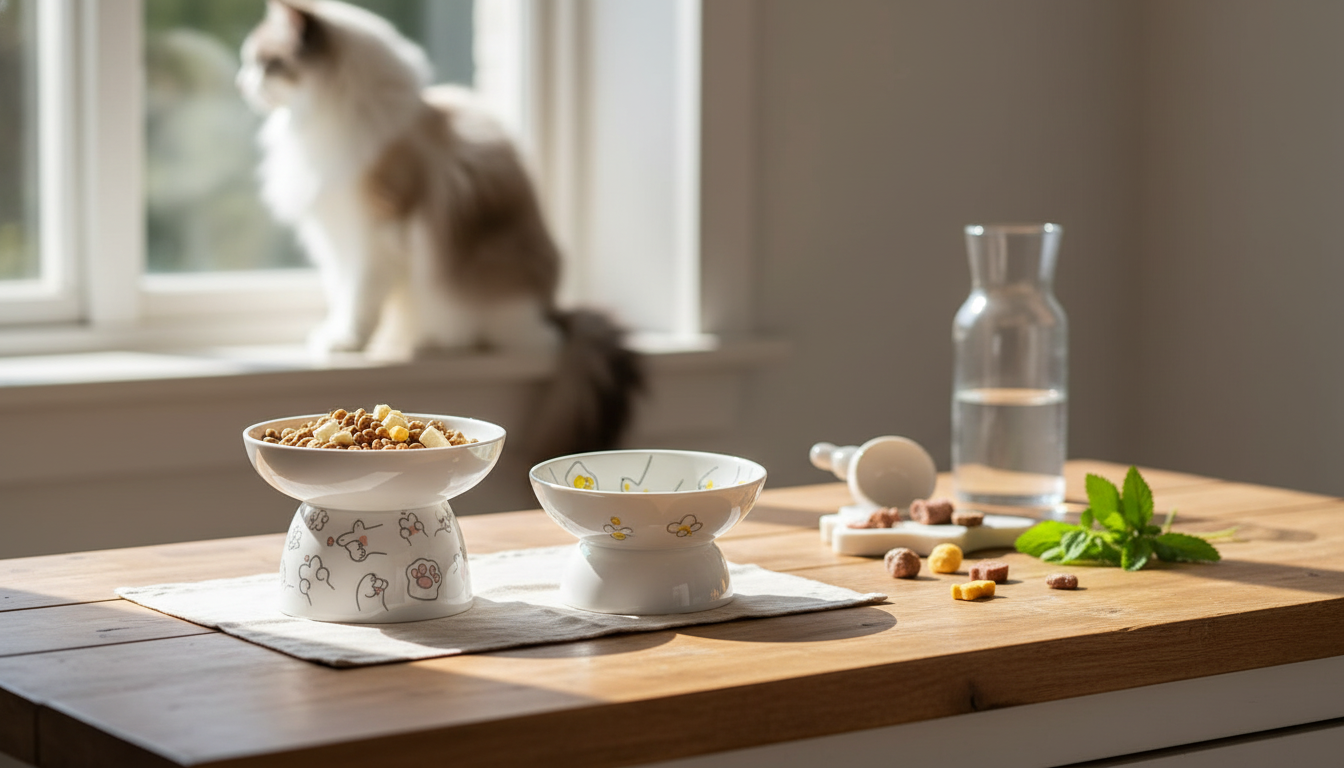
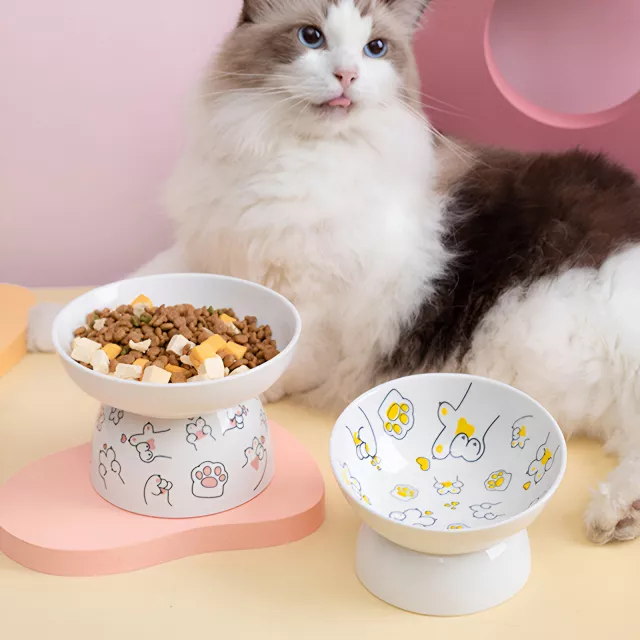
Ergonomic Ceramic Cat Food and Water Bowl with Elevated Design
Comfortable mealtimes can make a noticeable difference for cats that eat too fast, seem uneasy at the bowl, or simply prefer a cleaner, more stable setup. An elevated ceramic set supports a more natural eating angle, keeps food and water contained, and is easy to maintain—ideal for daily feeding routines in small or busy homes.
If you’re setting up a tidier feeding corner or upgrading from lightweight dishes that slide around, an elevated ceramic bowl can be a simple change that makes everyday routines smoother for both cats and pet parents.
Why an Elevated Bowl Can Help at Mealtime
- Supports a more comfortable head-and-neck position for many cats, especially seniors or cats that seem stiff after meals.
- Helps keep whiskers from pressing hard against the sides when the bowl shape is wide and open.
- Can reduce floor mess by keeping the eating area more contained and harder to tip.
- Encourages a consistent feeding station, which can be helpful for multi-cat households and routine-based cats.
While every cat has preferences, posture is a helpful clue. A cat that crouches low, backs away frequently, or seems to “hover” over the dish may do better with food and water raised closer to a comfortable height. For cats that are anxious eaters, a stable, predictable station can also reduce startle moments and encourage calmer eating.
Ceramic Benefits for Food and Water
- Non-porous ceramic is less likely to retain odors and residue compared with some plastics.
- Helps maintain a clean taste for water and wet food, particularly for cats sensitive to smells.
- Easy to sanitize with regular washing, supporting a fresher feeding setup.
- Heavier material typically sits more securely, which can help prevent sliding during enthusiastic eating.
Cats can be surprisingly particular about taste and smell—especially with water. A clean, non-porous bowl surface can help reduce lingering odors that may discourage drinking. For general feeding and nutrition guidance, reputable references like the WSAVA Global Nutrition Toolkit and pet owner resources from the AVMA are useful starting points.
What Makes This Bowl Set Ergonomic
- Elevated design aims to bring food and water closer to a comfortable height, reducing the need to crouch low.
- Stable base helps keep bowls in place, which can reduce startle moments for cautious cats.
- Separate food and water positions support a tidy routine and can help with portioning.
- Suitable for dry food, wet food, and fresh water as part of a daily feeding schedule.
The goal of “ergonomic” feeding is simple: less strain, fewer distractions, and a setup that stays put. If your cat tends to nudge bowls across the kitchen or flick kibble out while eating, a heavier ceramic set can help keep everything in one place. For a closer look, see the Ergonomic Ceramic Cat Food and Water Bowl with Elevated Design.
Quick Specs at a Glance
Here’s a quick snapshot for easy comparison when planning a feeding station in an apartment kitchen, laundry room corner, or dedicated pet area.
| Detail | Value |
|---|---|
| Product | Ergonomic Ceramic Cat Food and Water Bowl with Elevated Design |
| Category | Feeding Supplies |
| Availability | In stock |
| Price | $11.51 USD |
| Product page | View details |
Cleaning and Everyday Care
- Wash bowls regularly to reduce biofilm and food residue; rinse well to avoid soap taste.
- Replace water daily and clean the water bowl more often if using wet food nearby.
- Keep the feeding area dry underneath to avoid grime buildup around the base.
- For tight edges and corners around a feeding station, a small cleaning brush can simplify maintenance.
Daily routines matter most: a quick rinse and refill, plus regular washing, keeps the station fresh and helps prevent the “slimy” feel that can develop on water bowls over time. If your sink brush can’t reach narrow edges or grooves around the feeding area, the 3-in-1 Bottle Gap Cleaner Brush can be a handy add-on for targeted scrubbing in creases and tight spots.
If your cat has ongoing digestive issues, changes in appetite, or you suspect pain while eating, it’s worth discussing with a veterinarian. Educational resources from the Cornell Feline Health Center can also help pet parents understand common feline health concerns and when to seek care.
Placement Tips for a Calmer Feeding Station
- Choose a quiet spot away from litter boxes and loud appliances to reduce stress.
- Use a washable mat to catch crumbs and splashes, especially for messy drinkers.
- Keep bowls a short distance from walls if a cat prefers to look around while eating.
- In multi-cat homes, consider separate stations to reduce guarding and rushed eating.
Lighting and noise can change how secure a cat feels while eating. A softly lit corner can be helpful for cats that hesitate in darker areas at night. If your feeding station doubles as an evening routine spot, a gentle room light such as the 13-Color RGB LED Night Light for Kids can make the space feel more consistent after sunset—without needing overhead lights that may startle sensitive pets.
Who This Bowl Set Suits Best
FAQ
Is an elevated bowl good for older cats?
It can be helpful for seniors that seem stiff or reluctant to crouch, since the raised height may support a more comfortable eating posture. Comfort varies by cat, so watch their posture and ease of eating over a week and adjust placement if needed.
How often should a cat’s water bowl be cleaned?
Rinse and refill daily, and wash the bowl regularly to limit residue and biofilm buildup. In warm rooms or if bits of food get into the water, cleaning more often helps keep the water tasting fresh.
Is ceramic safer than plastic for cat bowls?
Ceramic is typically non-porous and less likely to retain odors compared with some plastics, which many cats prefer. Make sure the glaze stays intact and continue routine washing, since any bowl can harbor residue if not cleaned.











Leave a comment