


How to Choose Blackout Curtains for Every Room
A streetlight outside the bedroom, a bright early sunrise, or afternoon glare on the TV can make an otherwise comfortable room feel impossible to use. Knowing how to choose blackout curtains helps you solve those problems without giving up the style, color, or value you want from your window treatments.
Blackout curtains are designed to block most outside light, add privacy, and help make rooms feel more comfortable throughout the day. The right pair depends on more than a label that says “blackout.” Fabric construction, curtain size, rod placement, color, and the way the panels meet the wall all affect the results. Shop with those details in mind, and you can find an option that works for your room and your budget.
Start With the Room’s Main Need
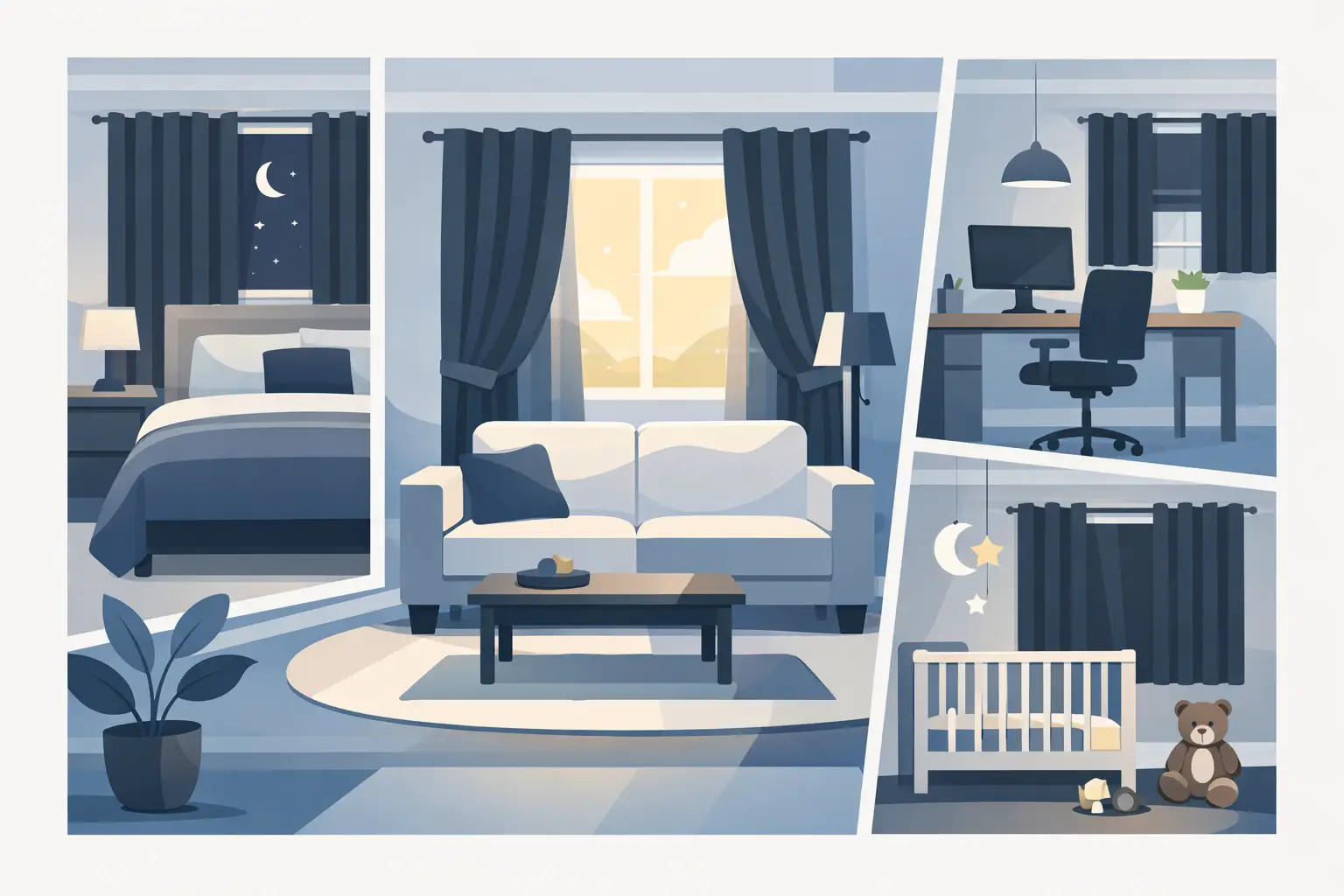
Before comparing colors or patterns, decide what you want the curtains to do. Bedrooms often need the strongest light control for better sleep, especially for shift workers, children, and anyone bothered by morning sun. Nurseries benefit from a darker, calmer space for naps, while media rooms need reduced glare for movies and gaming.
In a living room, you may want privacy and softer daylight rather than near-total darkness. A home office may need glare control during video calls but still benefit from natural light at other times. This is where a room-darkening curtain can be a better fit than a true blackout panel.
Blackout curtains can also provide a modest buffer against heat and cold near windows. They are not a replacement for insulated windows, but a lined, tightly fitted panel can help reduce drafts and limit direct sun that warms up a room. If energy comfort matters, prioritize heavier materials and full coverage over a thin decorative panel.
Understand Blackout vs. Room-Darkening Curtains
The terms are often used together, but they do not always mean the same thing. Room-darkening curtains filter a substantial amount of light, making a room noticeably dimmer while allowing some glow around and through the fabric. Blackout curtains are made to block much more light, usually through a dense woven fabric, a foam-backed layer, or a separate blackout lining.
For a bedroom where daylight is the main issue, choose a blackout-rated option. For a dining room, guest room, or living area where you want a softer atmosphere, room-darkening curtains may feel less heavy and give you more flexibility during the day.
Keep expectations realistic. Even high-quality blackout panels can allow light around the top, bottom, and sides if they are installed too narrowly or too low. The curtain itself may block the light well, but the fit is what turns it into an effective light-control solution.
Measure for Coverage, Not Just the Window
A common shopping mistake is buying panels that match the exact width of the window. That leaves gaps and creates a flat, undersized look when the curtains are closed. For fuller coverage, choose a combined curtain width that is typically 1.5 to 2 times the width of your window or curtain rod. A wider window may need two generous panels or multiple panels depending on the style.
For better blackout performance, extend the rod beyond the window frame on both sides. A few extra inches allow the fabric to cover the edges where light often leaks through. Mounting the rod several inches above the window also helps block light from the top and makes the ceiling appear higher.
Length matters just as much. Floor-length curtains are usually the most effective choice for bedrooms and media rooms because they leave fewer open areas for light. Panels that stop at the sill or below the window can be practical in kitchens or around radiators, but they will not offer the same light-blocking coverage.
Measure from the top of the rod to your preferred endpoint before ordering. For a clean look, curtains should hover just above the floor or lightly touch it. If you prefer a more relaxed style, a small amount of fabric can pool on the floor, though that may collect dust and require more upkeep.
Choose the Right Fabric and Lining
When deciding how to choose blackout curtains, look past the color and read the material details. A dark-colored curtain is not automatically a blackout curtain, and a pale curtain can still block light effectively if it has the right lining.
Polyester is a popular choice because it is durable, easy to care for, and available in a wide range of colors and textures. Velvet curtains bring a richer, heavier look and naturally provide strong light control, making them a good match for bedrooms, formal living rooms, and media spaces. Linen-look fabrics offer a lighter, more casual style, but they usually need a blackout backing or lining to perform well.
Blackout liners may be sewn into the panel, attached separately, or added behind existing curtains. Built-in lining is the simplest all-in-one choice. A separate liner can be useful if you already have decorative curtains you like and only need better light control.
Heavier fabrics often improve insulation and help absorb some outdoor noise, but they can be more difficult to wash and may require a stronger curtain rod. If easy care is your priority, check whether the panels are machine washable, spot clean only, or dry clean only before you buy.
Pick a Color That Works in Daylight
Blackout curtains do not have to make a room look dark when they are open. Choose a color based on the walls, furniture, and overall feel you want during the day. Neutral shades such as beige, gray, cream, taupe, and navy are easy to coordinate and can work across changing decor.
Light-colored panels can keep a small room feeling open, especially when they have a true blackout lining. Darker colors can add contrast, create a cozy mood, and work well in bedrooms or entertainment spaces. If you are covering a sunny window, a lighter color facing the room may also help the space feel less visually heavy.
Patterned blackout curtains can add personality, but consider the scale of the print. A large, bold pattern can become the focal point in a simple room. A subtle texture or small pattern is often easier to pair with existing rugs, bedding, and furniture.
Select a Header Style That Fits Your Setup
The top of the curtain affects both appearance and how well the panel closes. Grommet-top curtains have metal rings that slide easily across a rod, making them a convenient choice for everyday use. They create clean, even folds and suit modern or casual spaces.
Rod-pocket curtains offer a more traditional look, but they can be slower to open and close because the fabric slides directly on the rod. Back-tab panels provide a tailored appearance with hidden loops behind the fabric. They are a good choice when the curtains will stay mostly in place.
For the strongest blackout effect, consider clip rings or a wraparound curtain rod. A wraparound rod curves toward the wall at each end, helping the curtain sit closer to the wall and reducing side gaps. This small upgrade can make a major difference in a bright bedroom.
Check for Details That Improve Everyday Use
A few product features can make blackout curtains easier to live with. Thermal lining can help with temperature comfort near drafty or sun-exposed windows. Noise-reducing claims can be useful in busy areas, although curtains will soften sound rather than fully block traffic, neighbors, or outdoor activity.
If you have pets, children, or a high-traffic household, choose fabric that is easy to clean and less likely to snag. In a rental, tension rods or simple adjustable rods may be more convenient than permanent hardware. For wide windows, make sure the rod and brackets are rated to support the weight of heavier panels.
Also think about how often you will open the curtains. If you want daylight every morning, easy-glide grommets or rings are worth the added convenience. If the curtains are mainly for a guest room or home theater, a more decorative header may be perfectly practical.
Make the Final Choice With the Full Setup in Mind
The best blackout curtains balance performance with how your room actually functions. A bedroom may need wide, floor-length lined panels on a wraparound rod. A living room may be better with room-darkening curtains that preserve a brighter daytime feel. For an apartment, an affordable washable option with simple hardware can deliver a noticeable upgrade without a complicated installation.
When you compare options, focus on coverage, construction, care needs, and the look you will enjoy every day. A well-sized pair of curtains can make your room quieter, more private, and far more comfortable from the first night you hang them.











Leave a comment