


Car Spoilers vs Body Kits: Which Upgrade Fits?
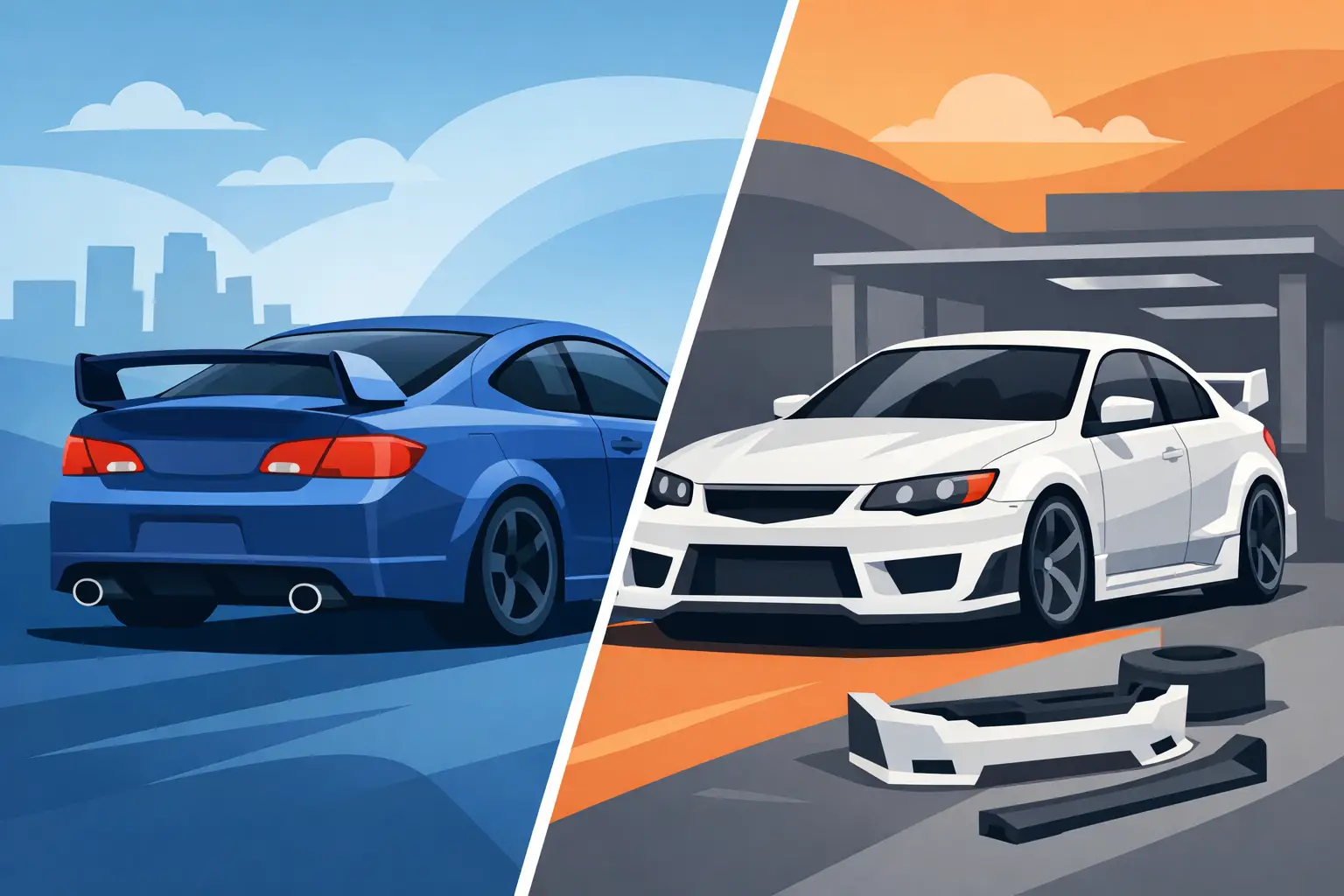
A rear spoiler can change your car’s profile in an afternoon. A full body kit can make it look like an entirely different model. When comparing car spoilers vs body kits, the better choice comes down to how much visual impact you want, how much you want to spend, and how involved you want installation to be.
For many drivers, an exterior upgrade is not about building a track car. It is about making a daily driver feel more personal without creating a complicated project. Start with the look you want, then consider fitment, ground clearance, material, and the amount of upkeep you are comfortable with.
Car Spoilers vs Body Kits: The Main Difference
A car spoiler is usually a single exterior piece mounted on the trunk, rear hatch, roofline, or sometimes the front of the vehicle. Rear trunk spoilers are the most familiar option. They range from subtle lip spoilers that follow the factory body line to taller wings with a more aggressive performance look.
A body kit is a collection of exterior components designed to reshape more of the vehicle. Depending on the kit, it may include a front lip or bumper cover, side skirts, rear diffuser, rear bumper pieces, fender flares, and sometimes a spoiler. Rather than adding one focal point, a body kit creates a more complete, customized appearance from multiple angles.
That difference affects nearly every part of the purchase. Spoilers are typically less expensive, easier to install, and easier to reverse. Body kits can deliver a bigger transformation, but they require more planning, more precise fitment checks, and often professional paint and installation work.
Choose a Spoiler for a Focused, Lower-Commitment Upgrade
A spoiler is often the smart first move for drivers who want a noticeable change without altering the whole exterior. It can sharpen the rear view of a sedan, give a hatchback a sportier roofline, or add a finished look to a coupe with otherwise factory styling.
Style options that work with daily drivers
Lip spoilers are a popular choice because they tend to look close to factory equipment. They sit low on the trunk edge and add definition without taking over the car’s design. Color-matched painted spoilers offer an OEM-style result, while gloss black, carbon-fiber-look, and matte finishes can create contrast.
Larger pedestal spoilers and wings make a stronger statement. They can suit sporty coupes and performance-inspired builds, but the look needs to match the vehicle. A very tall wing on a conservative family sedan can feel out of place unless the rest of the build supports it.
Cost, installation, and convenience
Many spoilers install with automotive-grade double-sided tape, bolts, or a combination of both. Tape-mounted lip spoilers are generally the simplest option, although surface preparation matters. The trunk must be clean, dry, and properly positioned before the adhesive is applied. Once strong tape bonds, adjustment is not always easy.
Bolt-on spoilers are more secure but may require drilling. That is not necessarily a problem when the spoiler is designed for your exact vehicle, but it is a permanent modification that deserves careful measurement. If your car has a factory spoiler, verify whether an aftermarket replacement uses the same mounting points.
A spoiler can be an approachable upgrade for a budget-conscious shopper, especially when you choose a vehicle-specific part and a finish that does not require immediate painting. It also leaves room to add matching mirror caps, window trim, lighting, or other accessories later.
What a spoiler will not do
Most street-oriented spoilers are primarily styling parts. While aerodynamics are real, meaningful downforce depends on the spoiler’s shape, angle, placement, vehicle speed, and the overall airflow around the car. A small cosmetic spoiler should not be expected to transform handling on public roads.
If performance is your main goal, focus first on maintenance, tires, brakes, suspension condition, and appropriate driving habits. Treat a spoiler as a visual upgrade unless it is engineered specifically for your vehicle and intended use.
Choose a Body Kit for a Bigger Visual Transformation
A body kit is for drivers who want their vehicle to stand apart immediately. Properly matched components can make a car look lower, wider, and more performance-oriented while tying the front, sides, and rear together.
The payoff is clear: a full kit can create a custom build rather than a lightly modified factory car. The trade-off is that body kits ask more of the buyer before checkout and after delivery.
Fitment matters more than the photos
The best-looking body kit online can become frustrating if it is not made for the exact year, make, model, trim, and body style of your vehicle. A part designed for a sedan may not fit the coupe version. A pre-facelift bumper may differ from a later refresh. Factory sport packages can also change mounting points and lower bumper shapes.
Before ordering, confirm every available fitment detail. Check whether the kit is intended to mount over factory bumpers or replace them, whether hardware is included, and whether sensors, cameras, tow hooks, fog lights, or parking-assist features need to be transferred. Do not assume that a part labeled for a vehicle family fits every version.
Material also changes the ownership experience. ABS plastic is commonly chosen for its flexibility and daily-driver durability. Polyurethane can handle minor impacts well but may be heavier and harder to paint. Fiberglass is often used for aggressive designs and can be cost-effective, but it may need more prep work and can crack more easily after contact with curbs or road debris.
Installation can involve more than mounting
A body kit often needs test-fitting before paint. This step helps an installer identify small adjustments, align panels, and confirm clearances around doors, wheels, exhaust tips, and factory equipment. Painting should generally happen after fitment is confirmed, not before.
Professional installation is worth considering for multi-piece kits, painted components, or parts that require bumper removal. A shop can also help ensure panels are securely mounted and aligned. Poorly installed side skirts or bumpers can rattle, sag, scrape, or come loose at highway speeds.
A body kit may also change your daily driving routine. Lower front lips and side skirts are more vulnerable to steep driveways, parking blocks, potholes, and snow-packed roads. If you regularly deal with rough pavement or crowded city parking, a subtle kit or durable front lip may be more practical than an extremely low design.
Compare Cost Beyond the Product Price
With car spoilers vs body kits, the listed price is only one part of the decision. A spoiler may need paint, adhesive, hardware, or installation. A body kit may need all of those items plus professional fitting, paint matching, bumper removal, and possible modifications around sensors or exhaust openings.
Think about the finished cost before choosing. A low-priced universal body kit that needs heavy adjustment can cost more in labor than a vehicle-specific kit with a higher upfront price. Similarly, a spoiler that arrives in a finish you like may provide better value than an unfinished piece requiring custom paint.
For a clear budget plan, separate the project into the part itself, finishing supplies or paint, installation, and future repair risk. Exterior pieces live close to road debris, curbs, weather, and car washes. Buying a part that is easier to replace can be a practical advantage for a daily driver.
How to Pick the Right Upgrade for Your Vehicle
Start with your goal. If you want a cleaner rear profile, a subtle lip spoiler may be enough. If you want a more dramatic street-style appearance from every angle, a coordinated body kit is the stronger option. There is no need to modify every panel simply because a full kit is available.
Next, be honest about how you use the car. A commuter that sees rough roads, steep ramps, and winter weather benefits from conservative fitment and durable materials. A weekend vehicle or show-focused build gives you more freedom to choose lower, more aggressive components.
Finally, prioritize parts designed for your exact vehicle. This one choice helps reduce surprises with gaps, mounting, paint preparation, and factory features. At Vespena, shoppers can compare exterior accessories alongside practical vehicle upgrades, which makes it easier to build a look that fits both the car and the budget.
A Few Smart Checks Before You Order
Check local rules before installing tinted lighting elements, sharp protruding parts, or components that could interfere with required reflectors, license plates, cameras, or safety equipment. Rules vary by location, and a stylish upgrade should not create an avoidable inspection or visibility issue.
Also consider insurance and resale. Cosmetic modifications do not automatically cause problems, but documenting the parts and installation can be helpful. Keep receipts, take photos after installation, and tell your insurer if your policy requires aftermarket equipment to be declared.
The right exterior upgrade should make you want to look back at your car after parking it, not make every driveway feel like an obstacle. Choose the spoiler or body kit that suits your vehicle’s lines, your driving routine, and the amount of time you want to spend maintaining the finished look.












Leave a comment