


Adjustable Kids Basketball Hoop: Set, Heights & Tips
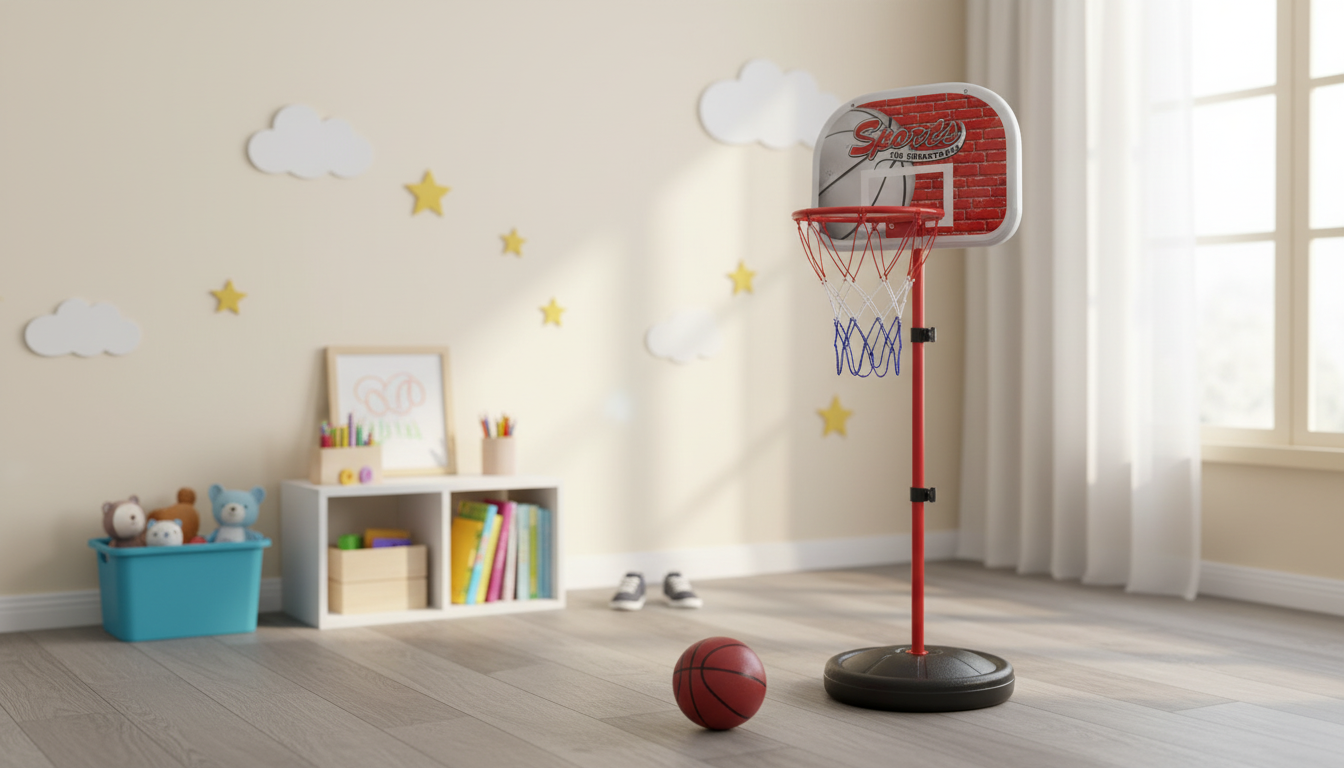
Adjustable Height Basketball Hoop Stand Set for Kids: A Fun Way to Build Skills at Every Stage
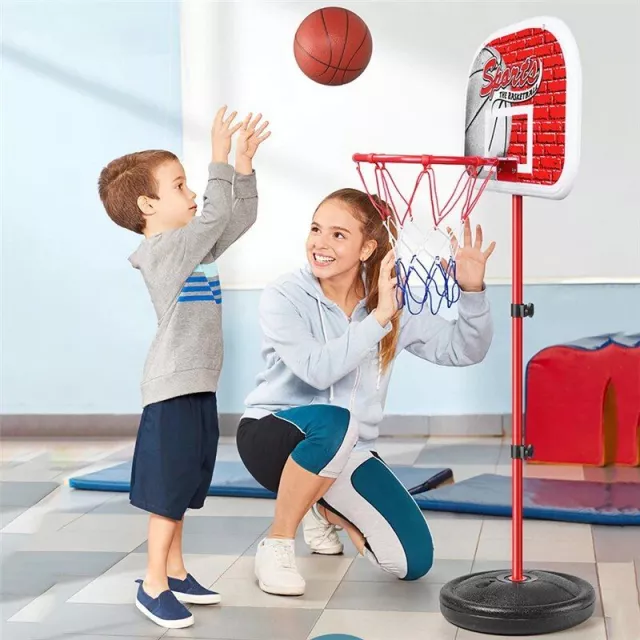
A height-adjustable basketball hoop stand helps kids practice shooting, dribbling, and coordination at a level that feels achievable now—and still challenging as they grow. This set is designed for quick play sessions in the driveway, backyard, or playroom, with an adjustable setup that supports skill-building, confidence, and active family time. For families looking to add more daily movement, the CDC highlights how regular physical activity supports kids’ overall health and development (CDC physical activity guidance).
Why an Adjustable Hoop Works Better for Growing Kids
One fixed hoop height can be too tall for a beginner and too easy for an older child. A stand that adjusts lets the game “fit” the player, which keeps practice positive and repeatable.
- Keeps the rim at a comfortable target so younger kids can learn proper form instead of heaving the ball.
- Makes it easy to raise the challenge gradually, supporting steady improvement without frustration.
- Encourages more reps: when shots go in more often, kids stay engaged longer.
- Fits mixed-age play—siblings can take turns with a quick height change.
- Supports different activities beyond shooting: layup practice, bank shots, and simple passing games.
What’s Included and What to Check Before Setup
Before the first game, a quick parts-and-placement check saves time and prevents wobbles later.
- Confirm all parts are present before assembly: base, pole sections, backboard, rim/net, and hardware.
- Look for adjustment points (pin/knob/collar) and ensure they lock firmly at each height setting.
- Choose a play ball size that matches the child’s age and strength for better control.
- Plan the location: flat surface, enough space behind and to the sides, and minimal obstacles.
- If the base is fillable, decide whether sand or water is best for the climate and storage needs.
Key Features to Prioritize for Everyday Use
For a hoop that gets used all week (not just once), small design details matter. Look for a setup that’s stable, easy to adjust, and tough enough for repeated rebounds.
- Stable base: a wider footprint and proper weighting reduce tipping during rebounds.
- Smooth height adjustment: quick changes make the hoop more likely to be used regularly.
- Backboard size and material: larger boards make it easier for beginners to use bank shots while learning.
- Rim and net durability: a sturdy rim keeps shape; a quality net resists tangling and fraying.
- Portability: wheels or a manageable carry method help move the hoop for storage or shade.
- Weather readiness: materials that resist fading and rust hold up better outdoors.
Recommended Height Goals by Age and Skill
The best “right height” is the one that teaches mechanics: balanced feet, soft release, and a follow-through the child can repeat. A practical approach is to start low for frequent makes, then raise the rim once the child shows consistent control.
- Start low enough for consistent makes to teach follow-through, aim, and gentle arc.
- Increase height when the child can make a set number of shots in a row from a comfortable distance.
- Use the backboard as a learning tool—bank shots can bridge the gap when raising the rim.
- Pair height changes with distance changes (closer at higher rim; farther at lower rim) to keep practice fun.
- If multiple kids share the hoop, set a “challenge height” for games and a “practice height” for form work.
Simple Height Targets for Practice Sessions
| Age range | Starter rim height | When to raise it | Practice idea |
|---|---|---|---|
| 3–5 | 3–5 ft | 8–10 close-range makes with good form | Two-hand set shots and gentle bank shots |
| 6–8 | 5–7 ft | 10 makes from 4–6 ft away | Layup steps, then one-dribble shots |
| 9–12 | 7–9 ft | 10 makes from 6–10 ft away | Form shooting, free-throw routine, catch-and-shoot |
| 13+ (beginner/intermediate) | 8–10 ft | Consistent makes from varied spots | Spot shooting, light conditioning drills |
Easy Setup and Placement Tips
Good placement makes the hoop feel better to play on: less wobble, cleaner rebounds, and fewer interruptions.
- Assemble on a soft surface (like grass or a mat) to avoid scratching parts and to keep hardware from rolling away.
- Tighten hardware evenly; re-check after the first week of use as parts settle.
- Place the hoop on a flat area to reduce wobble and keep rebounds predictable.
- Leave clearance: enough room for a running layup approach and safe stopping distance.
- For indoor play, use a soft ball and set clear boundaries to protect walls and furniture.
Safety and Stability Checklist
For additional family-friendly activity ideas and safe movement habits, the American Academy of Pediatrics offers guidance on building active routines (AAP Healthy Active Living).
Skill-Building Games Kids Actually Repeat
If you want more structured drills and age-appropriate progressions, Jr. NBA provides youth resources that make practice feel approachable (NBA Jr. NBA).
Care, Storage, and Seasonal Use
A Practical Gift for Active Play
Shop In-Stock Picks
- Adjustable Height Basketball Hoop Stand Set for Kids
- 13-Color RGB LED Night Light for Kids
- Portable Eye Massager
Product Snapshot
FAQ
What height should a basketball hoop be for a 5-year-old?
A good starting range is about 3–5 feet so a child can make shots often enough to learn follow-through and touch. Raise the rim once they can hit several close-range shots with steady form (not a full-body heave).
Is a portable hoop safe for kids to use?
Yes, when the base is properly weighted, the hoop is placed on a flat surface, and kids are supervised with a clear no-hanging rule. Re-check bolts and keep fingers away from adjustment points during height changes.
Can this be used indoors?
It can work indoors if you have enough clear space and use a soft/foam ball. Set boundaries to protect walls and furniture, and keep the rim height low to reduce hard rebounds.











Leave a comment