


Smart Corded Wall-Climbing Pool Cleaner with Long Cable
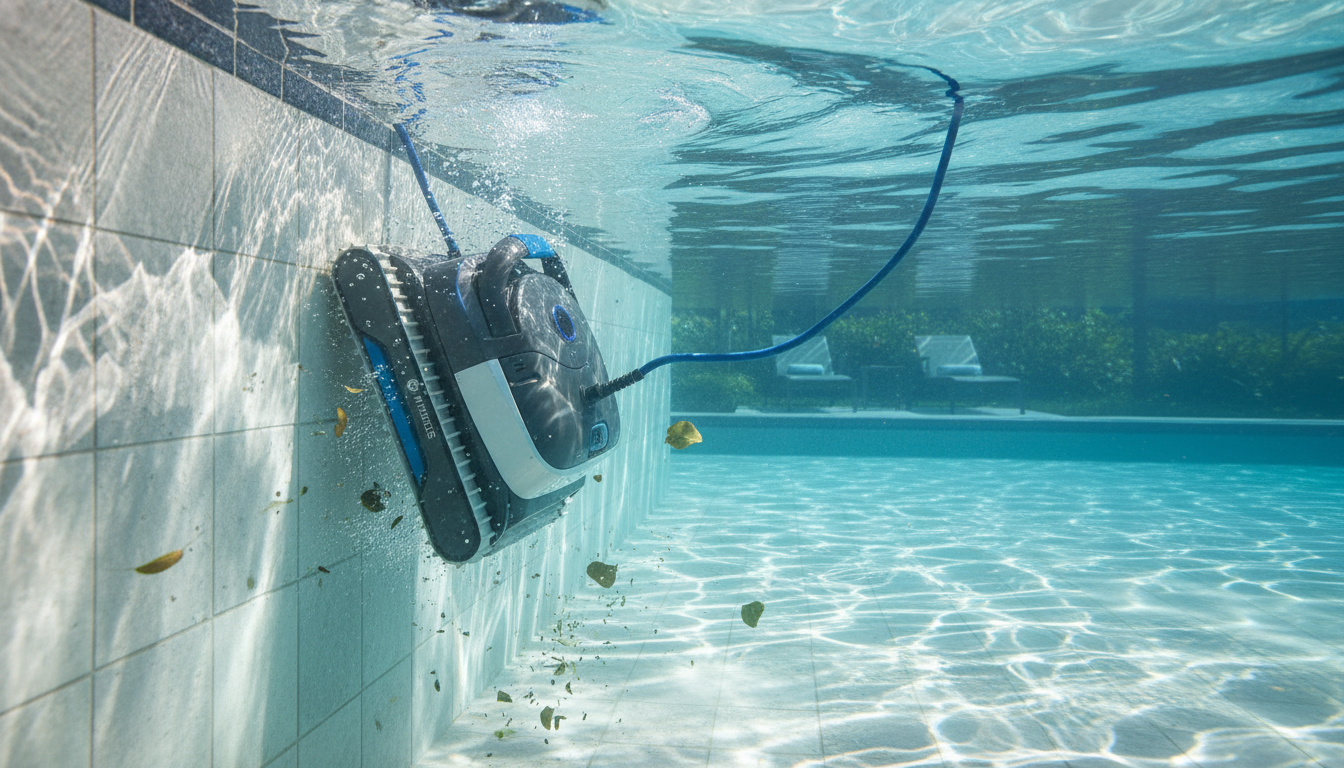
Efficient & Smart Swimming Pool Cleaner Electric, Wall-Climbing with Extended Cable
A wall-climbing electric pool cleaner can take over the most time-consuming parts of pool care—scrubbing surfaces, collecting debris, and reducing how often manual brushing is needed. A smart, corded wall-climbing cleaner with an extended cable is built for steady, repeatable performance: plug it in, drop it in, and let it work through the floor and up the walls where film and fine dust tend to stick. Below is what to expect from this style of cleaner, how to set it up for consistent coverage, and how to keep results strong throughout the season.
What this cleaner is designed to handle
A corded, wall-climbing robotic pool cleaner is primarily about keeping the pool “swim-ready” between deeper maintenance days. It’s designed to pick up what falls in daily, keep surfaces from developing that dull haze, and reduce how often the pool needs hands-on vacuuming.
- Routine removal of everyday debris (fine particles, leaves, and sediment) so the pool looks clear between deeper cleanings
- Wall and floor cleaning for pools where buildup tends to form along the waterline and vertical surfaces
- Longer-reach cleaning runs enabled by an extended cable, helpful for larger pools or deeper ends
- Regular cleaning cycles that reduce the need for frequent manual vacuuming and brushing
- Best fit for owners who want predictable, plug-in operation rather than managing battery charging
If you’re shopping for a corded option that emphasizes wall coverage and consistent power, see the Efficient & Smart Swimming Pool Cleaner Electric, Wall-Climbing with Extended Cable.
Key features that affect day-to-day results
Two cleaners can look similar on paper and still behave differently in real pools. The features below are the ones that most directly influence what you see after each run—especially on walls, along transitions, and during heavier debris weeks.
- Wall-climbing capability: Improves cleaning beyond the floor, where algae and film often accumulate.
- Smart navigation/automation: Aims to reduce missed spots and repeated passes in the same area.
- Extended cable reach: Helps prevent the cleaner from being limited to one section of the pool.
- Electric power: Consistent suction and movement without the mid-cycle slowdowns that come with low battery.
- Filter access and debris handling: Faster emptying encourages more frequent cleaning, which keeps suction strong.
| Pool/Usage Scenario | Why It Matters | What to Look For |
|---|---|---|
| Deeper pools or long lengths | A short cable can limit coverage and increase tangles | Extended cable length suited to the pool’s maximum dimension |
| Walls that get visible film | Floor-only cleaning leaves buildup on vertical surfaces | Reliable wall-climbing and stable traction |
| Heavy debris periods (storms/trees) | Clogging reduces flow and cleaning power | Easy-to-clean filter and straightforward debris removal |
| Frequent use (several times per week) | Convenience drives consistency | Simple start/stop controls and quick post-run cleanup |
| Corners and steps | Some cleaners struggle with transitions and edges | Strong wall transition ability and consistent movement patterns |
Setup tips for coverage and fewer cable issues
Most “it keeps getting stuck” or “it always misses that end” complaints come down to setup details—especially cable handling and where the control unit sits. A few small habits up front can improve coverage and reduce tangling over time.
- Place the power/control unit on a stable, dry area with a clear path to the pool edge to reduce stress on the cable.
- Before the first full run, straighten the cable to minimize memory coils that can increase tangling.
- Start with a clean filter so the first cycle establishes strong suction and stable climbing behavior.
- Run initial cycles during daylight to observe patterns; adjust placement if the cleaner repeatedly returns to one zone.
- After each run, rinse the filter with fresh water and store the cable loosely coiled to extend cable life.
For owners who want “set it and forget it” behavior, a good rule is to start the cleaner from a different location every few sessions (for example, alternate between the shallow end and the deep end). That small change can help distribute coverage in pools with unusual shapes, benches, or tanning ledges.
What changes performance (and how to fix it fast)
For pool-care fundamentals and safer handling of pool chemicals, refer to CDC Healthy Swimming — Pool Chemical Safety and the Pool & Hot Tub Alliance. For broader recreational water resources, see NSF’s pools and spas guidance.
Care and maintenance for a longer service life
Small, detail cleaning can also make routine pool tasks easier—like scrubbing tight gaps in baskets, lids, and small accessories. If you like having a dedicated tool for those hard-to-reach spots, consider the 3-in-1 Bottle Gap Cleaner Brush for quick touch-ups around non-pool parts and small cleaning jobs.
When a wall-climbing electric cleaner makes the most sense
If pool care is a weekend routine, comfort matters too—especially after sun and screen time. For a compact recovery add-on, the Portable Eye Massager is an easy option to keep on hand after long outdoor days.
FAQ
Does a wall-climbing pool cleaner also scrub the waterline?
Wall-climbing improves vertical coverage, but waterline scrubbing depends on traction, cycle behavior, and how slick the surface is. For stubborn waterline residue, occasional manual brushing is still helpful even with a strong wall climber.
How often should the filter be cleaned during peak season?
Clean it after each run during heavy debris conditions, and at least several times per week during normal use. Reduced suction, slower movement, or weaker wall climbing are common signs the filter needs attention.
What helps prevent cable tangling during longer runs?
Straighten the cable before use, keep the control unit positioned to minimize twists, and store the cable loosely coiled. If tangling persists, change the starting location occasionally to avoid repeated tight turns in the same area.















Leave a comment