


12/16mm Inline CO2 Reactor for Canister Filter Returns
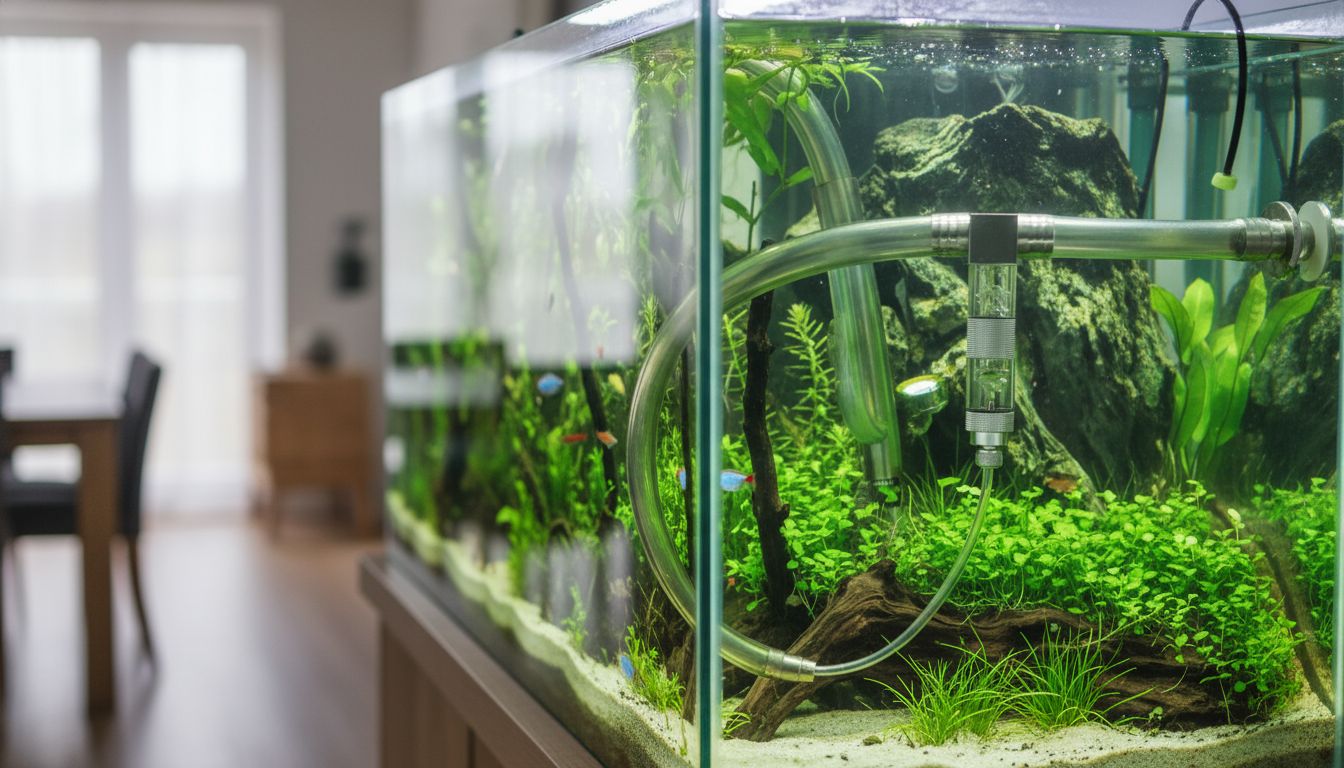
12/16mm External CO2 Diffuser & Reactor for Planted Aquariums
An external CO2 diffuser & reactor installs inline on a canister filter return to dissolve CO2 efficiently while keeping the display tank free of visible equipment and microbubbles. This 12/16mm model is designed for common 12/16mm hose setups, helping maintain steadier CO2 levels for healthier plant growth and more consistent aquarium balance. For more guidance, see [PDF] Gas-liquid mass transfer in an external airlift loop reactor for syngas ….
What an External Diffuser & Reactor Does
Compared to many in-tank diffusers, an inline reactor focuses on contact time and mixing as water passes through a chamber on your filter’s return line. The goal is straightforward: get more of the injected gas to dissolve before it reaches the aquarium, so the outflow can distribute CO2 evenly across the tank. For further reading, see Heated supersonic plasma flow reactor for spectroscopic studies of ….
- Dissolves injected CO2 into aquarium water as it passes through the inline chamber, improving CO2 distribution across the tank.
- Keeps the diffuser outside the aquarium, reducing visual clutter and leaving more space for aquascaping.
- Can reduce “mist” inside the tank compared with many in-tank diffusers, depending on CO2 rate and filter flow.
- Works best when paired with stable filtration flow and a reliable CO2 regulator/needle valve.
If you’re brushing up on planted CO2 fundamentals, these guides are helpful references: Tropica’s CO2 overview, Aquarium Co-Op’s CO2 system basics, and Practical Fishkeeping’s CO2 guidance.
Who It’s Best For
- Planted tanks that benefit from consistent CO2 delivery (especially medium-to-high light setups).
- Aquariums using a canister filter with 12/16mm hose (a common size on compact canisters).
- Aquascapes where minimizing equipment inside the tank is a priority.
- Keepers who want easier maintenance access outside the tank (no wet hands rearranging hardscape).
Key Features at a Glance
- Inline external design: mounts on the filter return line rather than inside the display.
- 12/16mm hose compatibility: intended for systems using 12/16mm tubing.
- Reactor-style mixing: encourages CO2-water contact time for improved dissolution.
- Simple integration: connects between the canister filter outlet and the aquarium return.
- Budget-friendly upgrade path: helps keep a clean look while improving CO2 efficiency.
Specifications and Compatibility
Before ordering, confirm the hose size printed on your canister filter manual or on the tubing itself. “12/16mm” typically refers to inner/outer diameter tubing used on many canister systems. For best results, install the reactor on the return/outflow line so the filter pushes water through the chamber and delivers CO2-enriched water back into the aquarium.
Inline Reactor Quick Check
| Item | What to verify | Why it matters |
|---|---|---|
| Hose size | 12/16mm tubing on the canister return | Ensures leak-free fit and proper flow |
| Install location | Return/outflow line (after filter) | Improves mixing and prevents backflow issues |
| CO2 input | CO2 tubing connected to reactor’s gas inlet | Delivers CO2 where it dissolves efficiently |
| Flow rate | Canister provides stable circulation | Helps maintain consistent CO2 concentration |
| Placement | Vertical or per manufacturer’s orientation | Reduces trapped gas pockets and noise |
Installation Guide (Practical Steps)
Most installs take just a few minutes, but the details matter because you’re working with pressurized water lines inside a cabinet. A clean cut, correct flow direction, and secure connections go a long way toward quiet, reliable operation.
- Turn off the canister filter and close valves (if present) before cutting or disconnecting tubing.
- Measure and cut the return hose cleanly; leave enough slack to avoid kinks when reconnecting.
- Install the reactor inline on the return line, ensuring the flow direction matches the arrow/markings if present.
- Secure all connections firmly; use hose clamps if needed to prevent slipping under pressure.
- Connect CO2 tubing to the reactor’s gas inlet and include a check valve to protect the regulator from water backflow.
- Restart the filter, check for leaks, then begin CO2 injection at a low rate and adjust gradually over several hours/days.
How to Dial In CO2 Without Stressing Fish
The best CO2 setup is the one that stays stable day after day. Plants typically “ask” for more CO2 quickly, while fish and shrimp can react badly to sudden spikes—so gradual adjustment is the safest path.
- Start low and ramp up slowly: sudden increases can stress livestock even if plants respond quickly.
- Aim for stable CO2 during the photoperiod: many setups start CO2 1–2 hours before lights and stop 1 hour before lights off.
- Watch livestock behavior: gasping at the surface or unusual lethargy can indicate excessive CO2.
- Balance agitation: add more surface movement at night if needed (or run an airstone after CO2 shuts off) while keeping daytime agitation moderate to avoid CO2 loss.
- Use tools wisely: a drop checker or pH/KH method can guide you, but consistency and livestock safety matter most.
Maintenance and Cleaning
Common Issues and Fixes
External Reactor vs In-Tank Diffuser
In-Stock Picks
- 12/16mm External CO2 Diffuser & Reactor ($8.51)
- 3-in-1 Bottle Gap Cleaner Brush ($2.06) — handy for detailed cleaning tasks in and around aquarium gear
FAQ
Will this work with my canister filter hose?
It’s designed for 12/16mm tubing, so verify your canister filter’s hose size (inner/outer diameter). Install it on the return/outflow line so water is pushed through the reactor for better mixing and dissolution.
Do I still need a check valve with an external reactor?
Yes. A CO2-safe check valve on the CO2 line helps prevent aquarium water from backing up toward the regulator during shutdowns or power interruptions.
Why is my reactor making a gurgling sound?
A gurgle usually means a gas pocket is building because CO2 input is higher than what’s dissolving at your current flow. Reduce injection slightly, confirm correct orientation, and check that hoses and filter flow aren’t restricted.















Leave a comment