


Magnetic Building Blocks for Kids: Skills Through Play
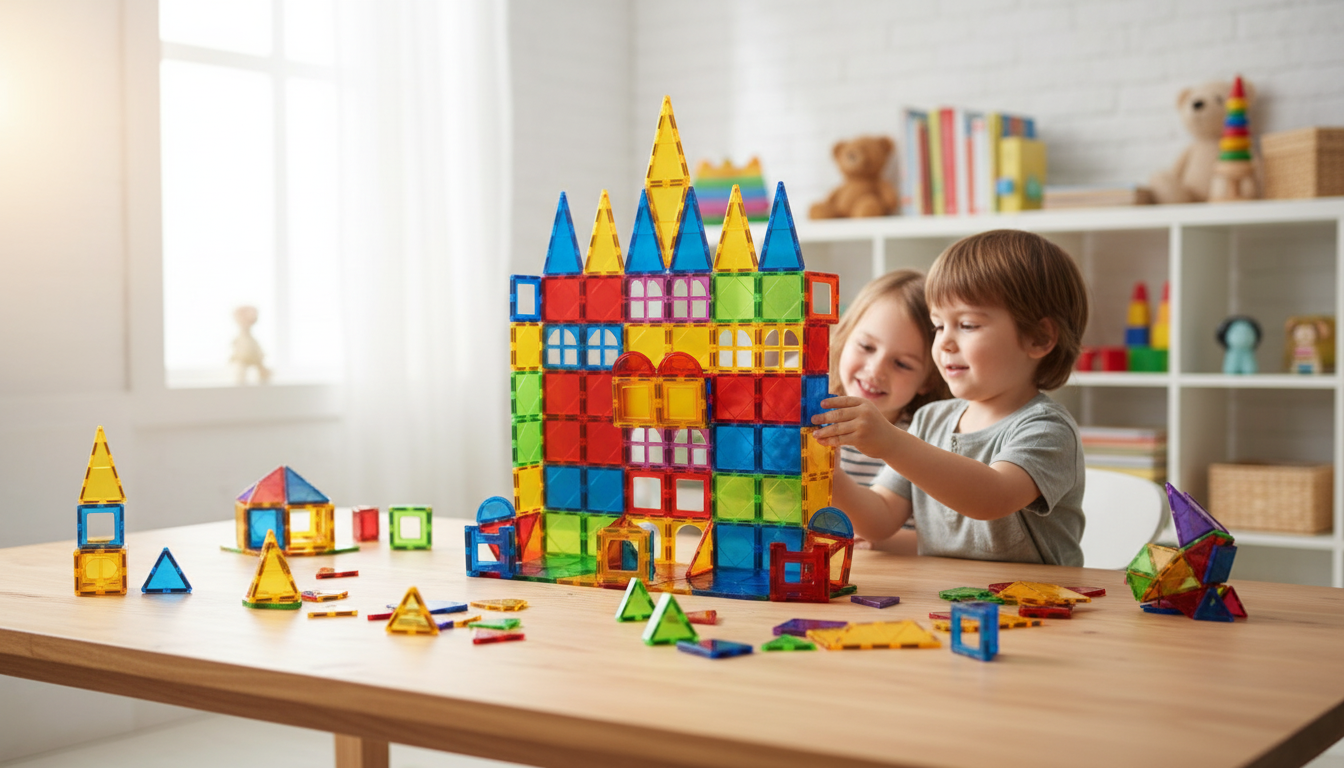
Magnetic Building Blocks for Kids: Creative Play That Builds Real Skills
Magnetic building blocks turn open-ended play into hands-on learning, letting kids snap shapes together into towers, animals, vehicles, and imaginative worlds. The best sets balance strong connections, kid-friendly materials, and age-appropriate pieces—so play stays fun, stable, and safe.
Why Magnetic Blocks Keep Kids Engaged
- Fast build-and-rebuild play: Magnets make it easy to experiment without frustration, so kids can iterate quickly when a design flops.
- Supports early engineering thinking: Kids discover what makes structures stable or wobbly (and why triangles often “save” a leaning wall).
- Encourages independent and collaborative play: Building together naturally invites turn-taking, shared planning, and teamwork.
- Works across ages: Younger kids enjoy simple stacking and color play, while older kids stretch into complex 3D builds and challenges.
Skills Kids Practice While Building
- Fine-motor control: Grasping, aligning edges, and rotating pieces builds hand strength and coordination.
- Spatial reasoning: Kids visualize shapes, symmetry, and how flat pieces become 3D forms.
- Early math concepts: Sorting by shape/color, counting pieces, comparing sizes, and exploring patterns.
- Problem-solving: Trial-and-error building teaches planning, testing, and revising.
- Language and storytelling: Finished builds become props for pretend play and description practice (“This is the garage, the ramp goes here…”).
Safety Basics for Magnetic Toys
Magnetic toys can be a fantastic learning tool, but they need thoughtful safety habits—especially in homes with younger siblings.
- Choose child-designed sets with securely enclosed magnets and durable seams.
- Match the set to the child’s age and supervision needs; smaller parts may pose choking risks for younger children.
- Inspect pieces regularly for cracks, loose magnets, or swelling; discard damaged parts immediately.
- Store away from toddlers and pets when not in use; keep sets contained in a box or bag.
- Seek medical help right away if magnet ingestion is suspected; swallowed magnets can be dangerous.
For broader safety guidance, review recommendations from the U.S. Consumer Product Safety Commission (CPSC) and the toy safety tips on HealthyChildren.org (American Academy of Pediatrics).
What to Look For in a Great Set
- Connection strength: Pieces should hold builds together without being hard to separate for small hands.
- Piece variety: A mix of squares, triangles, and specialty shapes expands what kids can build.
- Clear, bright colors: Helps with sorting and makes builds visually rewarding.
- Easy cleanup: A storage case or bag prevents missing pieces and keeps play areas tidy.
- Compatibility expectations: Some sets connect best within the same brand/line; check notes if mixing sets.
Quick checklist: features that matter most
| Feature | Why it matters | What to check |
|---|---|---|
| Secure magnets | Reduces risk of magnets coming loose during play | Smooth edges, intact seams, no rattling |
| Durable shells | Prevents cracking from drops and rough play | Thick plastic, consistent molding, no sharp corners |
| Shape variety | Enables stronger 3D structures and creative builds | Squares + triangles at minimum; extras are a plus |
| Age-appropriate size | Improves grip and reduces choking risk | Larger tiles for younger kids; smaller pieces for older kids |
| Storage solution | Makes cleanup simpler and protects pieces | Box, case, or bag that fits the full set |
Build Ideas That Grow With Your Child
- Beginner builds: Flat mosaics, color-matching lines, simple cubes, and low towers that practice “snap, align, press.”
- Skill builders: Bridges, ramps, and “strongest wall” challenges—especially using triangles as braces.
- Pretend play: Garages for toy cars, dollhouse rooms, castles, and animal habitats that invite storytelling.
- STEM challenges: “Tallest tower,” “span the gap,” or “build a shape with only triangles and squares.”
- Group play: Assign roles (builder, sorter, tester) and rotate so each child practices teamwork and communication.
A simple way to keep kids motivated is to add a “remix” step: after finishing a build, change one rule (make it taller, add a door, switch colors, or use fewer pieces) and see what new design appears.
A Solid Option to Start Building
If you’re looking for a ready-to-go set for home playrooms, rainy-day activities, or a classroom maker corner, Magnetic Building Blocks for Kids offers an inviting starting point for creative construction play.
- Works well for open-ended building sessions, from quick designs to longer projects that evolve over time.
- Supports imaginative add-ons: pair builds with small figurines or toy cars to extend play beyond the structure.
For a cozy “build and display” setup, consider adding a soft ambient light nearby, such as the 13-Color RGB LED Night Light for Kids, so kids can keep their creations visible during quiet time or bedtime routines.
Care, Storage, and Long-Term Use
- Wipe pieces clean with a damp cloth and mild soap as needed; avoid soaking to protect seams.
- Avoid heat and long sun exposure to reduce warping and keep pieces fitting well.
- Use a consistent cleanup routine: Sort by shape, then stack—this makes it easier to spot missing parts early.
- If combining sets, test first: Try a few connections to confirm magnet orientation and overall fit meet expectations.
FAQ
What age is appropriate for magnetic building blocks?
Use the manufacturer’s age guidance. Younger kids typically do best with larger pieces and close supervision, while older kids can handle more complex shapes and smaller components.
How can magnets in toys be used safely?
Choose sets with securely enclosed magnets, inspect pieces for damage, and supervise young children. If magnet ingestion is suspected, seek immediate medical attention.
Do magnetic tiles help with learning?
Yes—hands-on building can support fine-motor skills, spatial reasoning, early math (counting, patterns, shapes), and problem-solving through experimentation and design challenges.















Leave a comment