


Seat Cushions vs Seat Covers: What to Buy
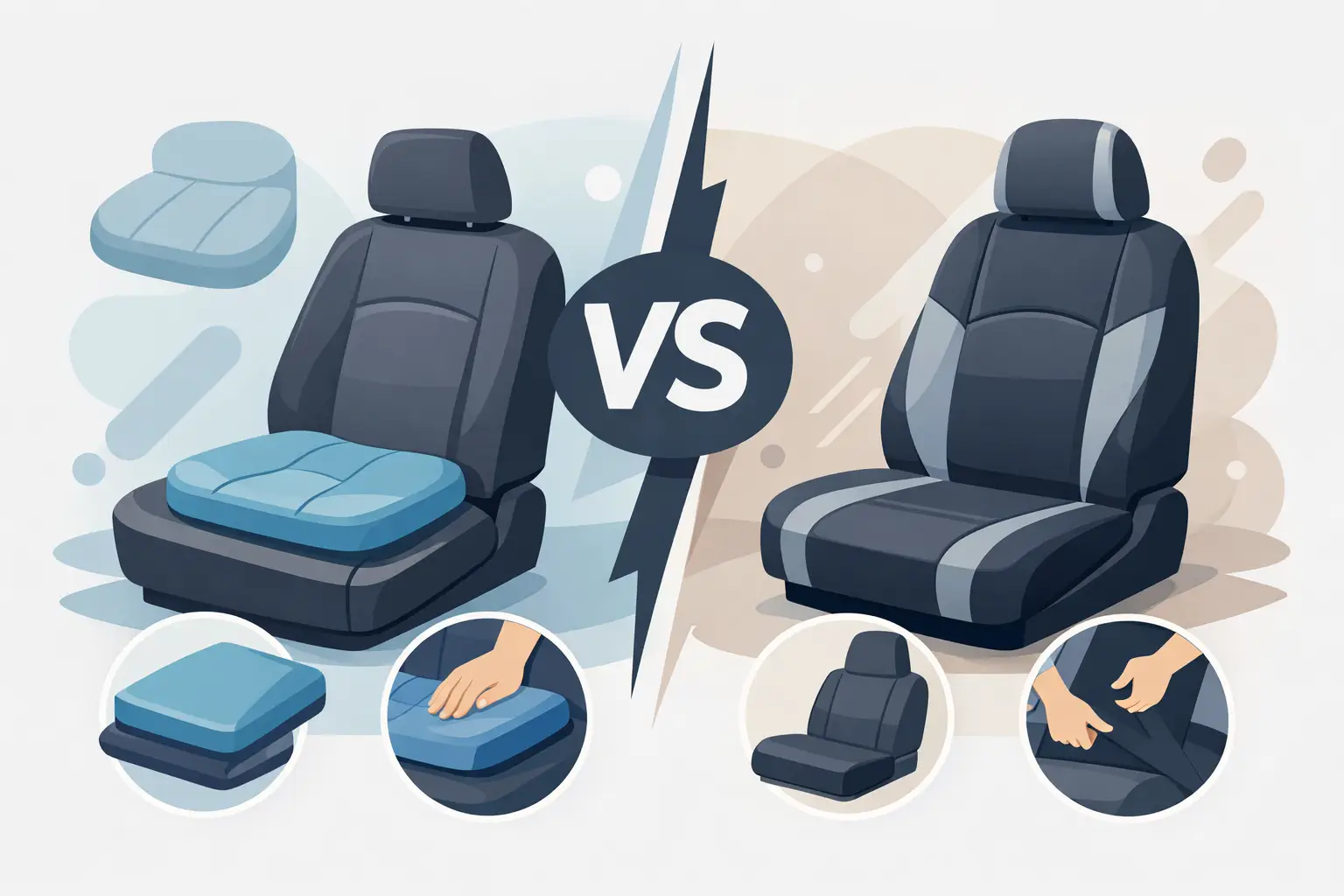
If your daily drive leaves your back stiff or your seats already show spills, fading, or wear, the seat cushions vs seat covers question gets practical fast. Both can improve your time behind the wheel, but they solve different problems. One is mainly about comfort and support. The other is mainly about protection, appearance, and preserving the seat underneath.
That difference matters because plenty of shoppers end up buying the wrong upgrade first. A driver with sore hips may order a stylish cover and still feel uncomfortable. Someone trying to protect new upholstery may buy a cushion, only to realize the seat bolsters and backrest are still exposed. If you want the best value, it helps to match the product to the problem.
Seat cushions vs seat covers: the core difference
A seat cushion adds padding or support where your body makes contact with the seat. It usually sits on the seat bottom, the backrest, or both. Depending on the design, it may focus on pressure relief, posture support, cooling airflow, or simple extra softness.
A seat cover wraps over the existing seat to protect it or change its look. Some are universal and designed to fit a wide range of vehicles. Others are more tailored for a closer, cleaner fit. Covers are often chosen to help with spills, pet mess, sun damage, daily wear, or a quick interior refresh without the cost of replacing factory upholstery.
In simple terms, cushions change how the seat feels. Covers change how the seat is protected and how it looks.
When a seat cushion makes more sense
If comfort is your main complaint, a cushion is usually the better place to start. Long commutes, rideshare driving, road trips, and stop-and-go traffic can make even a decent factory seat feel flat or too firm. A good cushion can reduce pressure points and make time in the car easier on your lower back and legs.
This is especially true if your seat itself is still in decent shape. If the upholstery looks fine and you do not need full-seat protection, adding a cushion can be the simplest and most affordable fix. Many shoppers also like that cushions are easy to move from one vehicle to another, which is helpful if you drive multiple cars or plan to change vehicles soon.
There is a trade-off, though. A cushion only covers part of the seat, so it will not protect the full seating surface from wear, spills, pet claws, or heavy daily use. It can also shift if the attachment system is basic or if the seat shape is slick and steeply contoured.
Best use cases for seat cushions
Seat cushions are a smart buy for drivers who want extra comfort, added support for long hours on the road, a quick upgrade for an aging seat, or a portable option that can move between vehicles. They also work well when you do not want to fully change the look of your interior.
When a seat cover is the better buy
If your main goal is to protect the original seat, a cover usually delivers more value. It creates a barrier between the seat and everything that causes wear – dirt, sweat, UV exposure, food, drinks, tools, kids, pets, and everyday friction from getting in and out.
Seat covers are also the stronger option when appearance matters. Maybe your factory seats are faded, stained, or just not your style. A cover can make the interior look cleaner and more uniform without the cost of reupholstering. For many drivers, that is the biggest win.
Covers do have limits. They do not automatically make a seat more comfortable, and some thinner options add almost no cushioning at all. Fit is another key factor. A poor-fitting cover can wrinkle, slide, bunch up, or interfere with the look of the cabin. That is why shoppers should pay close attention to dimensions, seat type, and compatibility.
Best use cases for seat covers
Seat covers are ideal for protecting new seats, hiding wear on older upholstery, refreshing the interior on a budget, and creating a cleaner barrier for kids, pets, or work use. They are also a strong choice for drivers who care as much about style as they do about practicality.
Comfort, protection, and style: which matters most?
For most buyers, the right answer comes down to your top priority.
If comfort is first, choose a seat cushion. If protection is first, choose a seat cover. If style is first, a seat cover usually has the bigger visual impact because it changes more of the seat surface.
That said, real-world use is not always that neat. Some shoppers want more than one benefit, and that is where product selection gets more specific. A padded seat cover can offer some comfort while still protecting the seat. A cushion with breathable fabric can improve comfort and slightly reduce wear on the area it covers. But hybrid benefits usually come with compromise. A padded cover may not feel as supportive as a dedicated ergonomic cushion, and a cushion will not protect the whole seat the way a full cover can.
Fit and compatibility matter more than people expect
This is where many online shoppers make avoidable mistakes. Universal products are convenient and often budget-friendly, but they are not all equal. Vehicle seats vary in width, contour, headrest shape, and split-seat configuration. Front bucket seats, rear benches, and truck seats all create different fit needs.
With seat covers, fit affects both appearance and function. A loose cover can look messy and feel annoying day after day. With cushions, fit affects stability and comfort. If the cushion is too thick, too narrow, or constantly sliding, it can create a worse seating position instead of a better one.
Airbag compatibility is another point to take seriously. Side-impact airbags built into seats require covers designed with that in mind. This is not the place to guess. Product details should be checked carefully before buying.
Material choices change the experience
Materials shape how each product performs. Memory foam cushions tend to focus on softness and pressure relief. Gel or mesh options may help with breathability. Firmer support cushions may appeal more to drivers who want posture help rather than a plush feel.
For seat covers, materials affect durability, maintenance, and appearance. Some are easier to wipe clean, which is useful for families and pet owners. Others lean more toward comfort or a premium look. If your car gets hot in summer or cold in winter, material feel matters more than you might think.
The best material is not universal. It depends on how you drive, where you park, who rides with you, and how much upkeep you want.
Price: which option gives better value?
If you only need one thing fixed, both seat cushions and seat covers can be cost-effective. A cushion often gives good value when discomfort is the issue because it targets the problem without requiring a full interior upgrade. A cover gives better value when preserving the original seat can save you from deeper wear or help maintain resale appeal.
If your seats are uncomfortable and damaged, buying only one may feel incomplete. That is when some shoppers end up replacing the first purchase later. Spending a little more upfront on the right solution is usually cheaper than buying twice.
For value-focused shoppers, the best approach is to think beyond the initial price. Consider how long you drive each day, how rough your vehicle use is, and whether you are protecting a newer interior or trying to improve an older one.
Can you use both?
Yes, but it depends on the design. Some drivers use a seat cover for protection and add a cushion on top for comfort. That setup can work well for long-distance driving, work trucks, or older vehicles where both comfort and seat preservation matter.
Still, layering products can create its own issues. Too much thickness may change seating height or driving position. Straps can overlap awkwardly. The final look may be bulkier than you want. If you plan to use both, it is worth choosing lower-profile products that are less likely to shift or bunch.
How to choose the right one for your car
A simple way to decide is to ask what annoys you every time you get in the car. If the answer is soreness, pressure, or lack of support, start with a cushion. If the answer is stains, wear, pet mess, or outdated upholstery, start with a cover.
Also think about who uses the vehicle. Commuters and rideshare drivers often notice comfort issues first. Parents, pet owners, and truck owners tend to prioritize protection. Style-focused drivers usually lean toward covers, while people looking for a quick practical fix may prefer cushions.
When shopping online, check dimensions, material details, seat type, attachment method, and care instructions. A broad selection helps because not every driver wants the same balance of comfort, protection, and appearance. That is where a retailer with strong automotive variety, like Vespena, can make the process easier by giving shoppers more than one path to the right upgrade.
The good buy is not the one with the most features on the page. It is the one that solves the problem you actually have every time you sit down to drive.











Leave a comment